
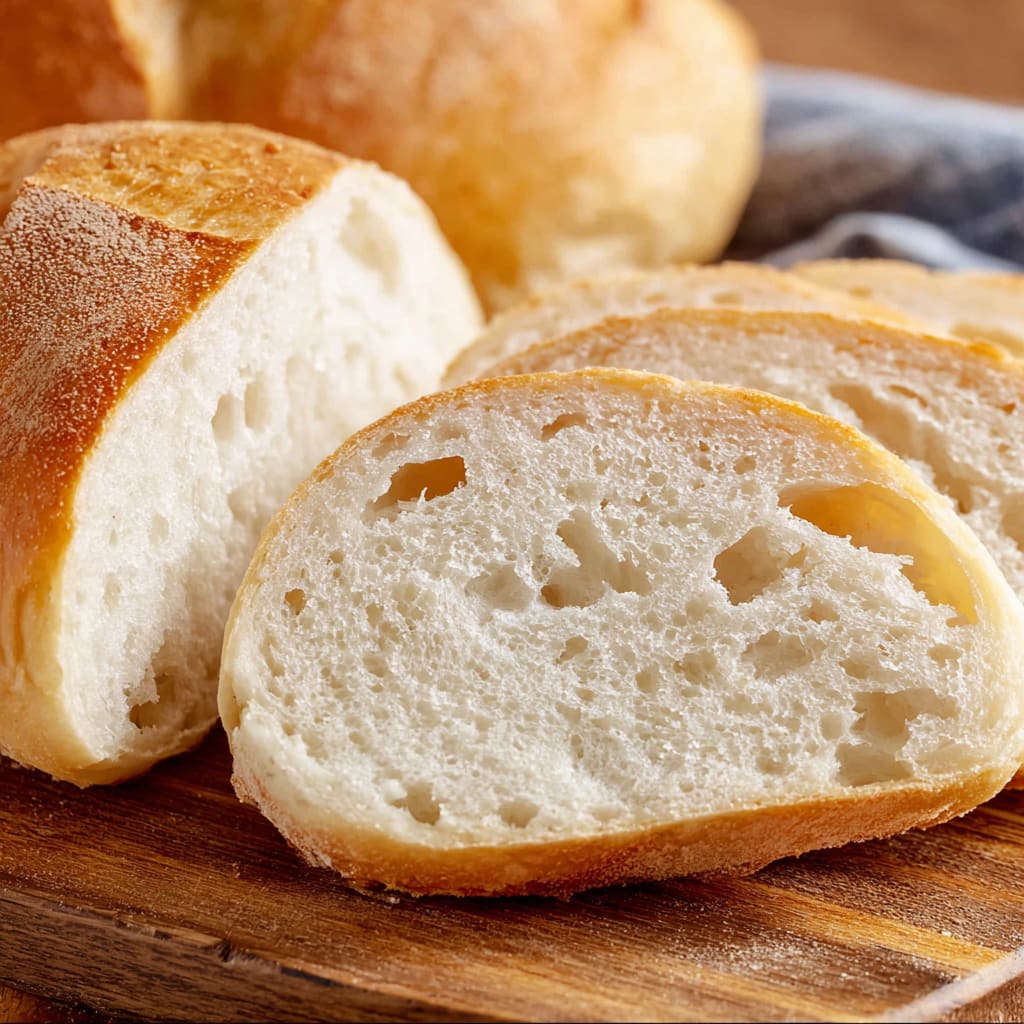
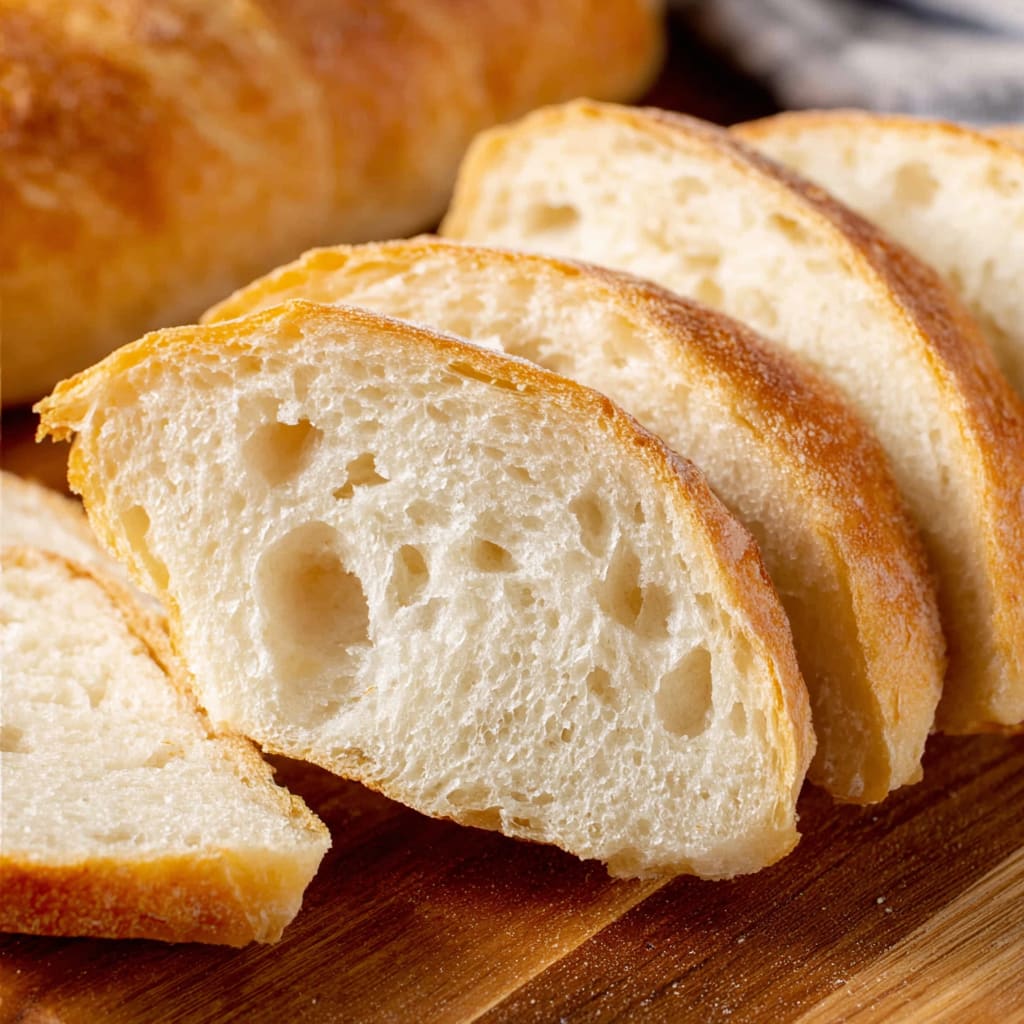
Imagine the irresistible aroma of freshly baked Homemade French Bread filling your kitchen—crusty on the outside, soft and pillowy on the inside, with that distinctive chewy texture that makes French bread so beloved worldwide. This classic Homemade French Bread recipe delivers bakery-quality results right from your own oven, without requiring professional equipment or specialty ingredients. The golden, crackling crust and tender interior crumb create that authentic French bread experience that’s perfect for everything from simple butter-slathered slices to gourmet sandwiches. You’ll learn how to shape, proof, and bake perfect French bread loaves with that signature crisp exterior and airy interior that will impress family and friends alike.
Why You’ll Love This Recipe
This Homemade French Bread recipe stands out from store-bought alternatives for so many reasons. First, the contrast between the crispy, crackling crust and the tender, chewy interior creates a textural masterpiece that’s impossible to resist. Unlike many bread recipes that require specialty flours or equipment, this approachable version uses basic pantry staples while still delivering authentic results.
The process is meditative and rewarding—there’s something deeply satisfying about working with dough that transforms from simple ingredients into beautiful, aromatic loaves. The steam method using ice cubes creates that professional bakery-quality crust without needing a steam-injected oven.
Perhaps best of all, the flavor of fresh bread is incomparable. The subtle yeasty tang and wheaty sweetness of Homemade French Bread simply can’t be matched by commercially produced versions that contain preservatives. Each bite offers that distinctive French bread chew that makes it perfect for dipping in olive oil, sopping up sauces, or enjoying with a spread of butter.
Ingredients List for the Homemade French Bread
The beauty of authentic Homemade French Bread lies in its simplicity. This recipe uses fundamental pantry ingredients that, when combined with proper technique, create that classic French bread texture and flavor we all love. The warm water activates the yeast, while the small amounts of sugar and oil provide just enough food for the yeast and tenderness to the crumb without interfering with that authentic taste.
- 2½ cups water (warm (95-105 degrees F))
- 2 tablespoons sugar
- 1 tablespoon active dry yeast
- 2 tablespoons olive oil
- 3/4 tablespoon salt
- 5½ cups all-purpose flour
- 1 large egg
- 1 tablespoon water
Pro Tips
Achieving perfect Homemade French Bread requires attention to a few critical techniques. First, temperature control is essential—your water must be between 95-105°F to properly activate the yeast without killing it. Too cold and the yeast won’t activate; too hot and you’ll kill the yeast cells. Use a kitchen thermometer for precision.
The scoring technique makes a significant difference in both appearance and texture. Use a very sharp blade (a baker’s lame, razor blade, or extremely sharp knife) and make quick, decisive cuts at a 45-degree angle, about ¼-inch deep. This allows for proper expansion during baking and creates that distinctive French bread appearance.
Finally, don’t skip the steam step with ice cubes! This crucial technique creates the environment needed for that crackling, crispy crust that defines authentic French bread. The steam allows the bread to expand fully before the crust sets, resulting in a lighter interior and that professional bakery-quality exterior. If you’re concerned about putting ice directly in your oven, you can alternatively place a metal baking pan on the bottom rack during preheating, then add hot water to create steam when you put the bread in.
Instructions
Step 1: In the bowl of a standing mixer, add warm water (between 95-105 degrees Fahrenheit), sugar, and yeast. Stir, and let sit for about 10 minutes, or until frothy.
Step 2: Add the oil, salt, and about half of the flour. Using the dough hook, mix on low for 1-2 minutes, or until all the flour is mixed in. Continue to mix on low and add flour 1/2 cup at a time until the dough pulls away from the sides of the bowl. You may need up to 1/2 cup of additional flour.
Step 3: Once the dough pulls away from the sides, mix on low for about 2 minutes. If the dough feels sticky, add a little more flour, until the dough is no longer sticky but is still soft.
Step 4: Turn the mixer off, cover the bowl with a towel, and let the dough rise for about 30 minutes.
Step 5: Meanwhile, lightly spray a large baking sheet or French bread loaf pans.
Step 6: Once your dough has risen, remove it from the bowl onto a lightly floured surface. Separate the dough into 2 equal pieces.
Step 7: Gently roll each piece of dough into a rectangle using a rolling pin, about 14″ x 8″. Using your hands, roll each rectangle up, starting from the longer edge and gently pressing out large air bubbles with the heel of your hand until you have 2 long narrow loaves.
Step 8: Carefully place the dough onto your prepared baking pans with the seam sides down. Cover with a kitchen towel, and let the dough rise in a warm place for 30-40 minutes, or until the dough has doubled.
Step 9: Preheat your oven to 375 degrees F.
Step 10: While the bread is rising, make your egg wash by beating the egg and water together in a small bowl. Once your bread has doubled in size, remove the towel and brush your egg wash all over the loaves using a pastry brush. Make sure you get all along each side.
Step 11: Score each loaf by making about 4 angled slashes with a bakers lame (or a razor blade).
Step 12: Put your baking pan in the hot oven and carefully place 5-6 ice cubes in the bottom of the oven, then quickly shut the oven door.
Step 13: Bake for 20-25 minutes, or until the bread is golden brown and baked through.
Step 14: Remove from the oven and let cool before slicing. Enjoy!
Variations
The classic Homemade French Bread recipe serves as a perfect canvas for delicious variations. For a rustic herb loaf, add 2 tablespoons of fresh chopped rosemary, thyme, or herbs de Provence to the dough during the mixing stage. The aromatic herbs infuse throughout the bread, creating a fragrant loaf perfect for serving with Mediterranean dishes.
For a heartier whole wheat version, substitute 2 cups of the all-purpose flour with whole wheat flour. This creates a nuttier, more robust French bread that maintains the signature crust while offering more fiber and a deeper flavor profile. You may need to add an extra tablespoon or two of water as whole wheat flour absorbs more moisture.
Garlic lovers can create a garlic French bread by mixing 4-6 cloves of minced garlic with 4 tablespoons of softened butter, then spreading this mixture inside the loaf after slicing it lengthwise (but not all the way through). Wrap in foil and warm in the oven for 10-15 minutes for a crowd-pleasing side dish.
Storage and Serving
Homemade French Bread is best enjoyed on the day it’s baked, when the contrast between the crisp crust and tender interior is at its peak. To store leftover bread, wrap it loosely in paper (not plastic, which softens the crust) and keep at room temperature for up to 2 days. For longer storage, freeze whole or half loaves tightly wrapped in plastic and foil for up to 3 months. Refresh frozen bread by thawing at room temperature, then warming in a 350°F oven for 5-10 minutes to restore the crust’s crispness.
For serving, present your Homemade French Bread with high-quality butter, olive oil with a sprinkle of flaky salt, or alongside a cheese board for an elegant appetizer. It makes an exceptional base for crostini topped with bruschetta, olive tapenade, or creamy cheese spreads. The bread also excels as the foundation for French toast or bread pudding when it’s a day old, soaking up the custard beautifully while maintaining some texture.
FAQs
Why didn’t my dough rise properly?
The most common culprits are using water that’s too hot (which kills yeast) or too cold (which doesn’t activate it), or using expired yeast. Test your yeast’s freshness by proofing it in warm water with a pinch of sugar—it should foam vigorously within 10 minutes.
Can I make this French bread without a stand mixer?
Absolutely! Mix ingredients in a large bowl with a wooden spoon until combined, then knead by hand on a floured surface for about 8-10 minutes until smooth and elastic. The texture should be the same—not sticky but still soft.
Why did my bread collapse in the oven?
Over-proofing is typically the cause. The dough should roughly double in size during the final rise—any more and it may collapse during baking. Also, make sure your oven is fully preheated before baking.
How can I get a crispier crust?
For an extra-crispy crust on your Homemade French Bread, increase the steam by adding more ice cubes, or place a metal pan with hot water on the bottom rack during baking. You can also mist the oven walls with water (avoid spraying light bulbs or heating elements).
Can I prepare the dough ahead of time?
Yes! After the first rise, punch down the dough, cover tightly, and refrigerate overnight. The slow, cold fermentation actually improves flavor. Let the chilled dough come to room temperature for 30 minutes before shaping and proceeding with the final rise.
Homemade French Bread
- Prep Time: 15 mins
- Cook Time: 30 mins
- Total Time: 45 mins
- Yield: 4 people 1x
- Category: Appetizer
- Method: Cooking
- Cuisine: American
Description
Learn how to make Homemade French Bread naturally at home with our easy step-by-step recipe. Discover the secret to perfect crust and fluffy center. Try it now!
Ingredients
- 2½ cups water (warm (95–105 degrees F))
- 2 tablespoons sugar
- 1 tablespoon active dry yeast
- 2 tablespoons olive oil
- 3/4 tablespoon salt
- 5½ cups all-purpose flour
- 1 large egg
- 1 tablespoon water
Instructions
- Step 1: In the bowl of a standing mixer, add warm water (between 95-105 degrees Fahrenheit), sugar, and yeast. Stir, and let sit for about 10 minutes, or until frothy.
- Step 2: Add the oil, salt, and about half of the flour. Using the dough hook, mix on low for 1-2 minutes, or until all the flour is mixed in. Continue to mix on low and add flour 1/2 cup at a time until the dough pulls away from the sides of the bowl. You may need up to 1/2 cup of additional flour.
- Step 3: Once the dough pulls away from the sides, mix on low for about 2 minutes. If the dough feels sticky, add a little more flour, until the dough is no longer sticky but is still soft.
- Step 4: Turn the mixer off, cover the bowl with a towel, and let the dough rise for about 30 minutes.
- Step 5: Meanwhile, lightly spray a large baking sheet or French bread loaf pans.
- Step 6: Once your dough has risen, remove it from the bowl onto a lightly floured surface. Separate the dough into 2 equal pieces.
- Step 7: Gently roll each piece of dough into a rectangle using a rolling pin, about 14″ x 8″. Using your hands, roll each rectangle up, starting from the longer edge and gently pressing out large air bubbles with the heel of your hand until you have 2 long narrow loaves.
- Step 8: Carefully place the dough onto your prepared baking pans with the seam sides down. Cover with a kitchen towel, and let the dough rise in a warm place for 30-40 minutes, or until the dough has doubled.
- Step 9: Preheat your oven to 375 degrees F.
- Step 10: While the bread is rising, make your egg wash by beating the egg and water together in a small bowl. Once your bread has doubled in size, remove the towel and brush your egg wash all over the loaves using a pastry brush. Make sure you get all along each side.
- Step 11: Score each loaf by making about 4 angled slashes with a bakers lame (or a razor blade).
- Step 12: Put your baking pan in the hot oven and carefully place 5-6 ice cubes in the bottom of the oven, then quickly shut the oven door.
- Step 13: Bake for 20-25 minutes, or until the bread is golden brown and baked through.
- Step 14: Remove from the oven and let cool before slicing. Enjoy!
Notes
Try This Recipe and Leave a comment Below, your opinion matters to me!
Nutrition
- Serving Size: 4 serving
- Calories: 400
- Sugar: 5g
- Sodium: 400mg
- Fat: 10g
- Saturated Fat: 3g
- Unsaturated Fat: 7g
- Trans Fat: 0g
- Carbohydrates: 40g
- Fiber: 5g
- Protein: 15g
- Cholesterol: 50mg