
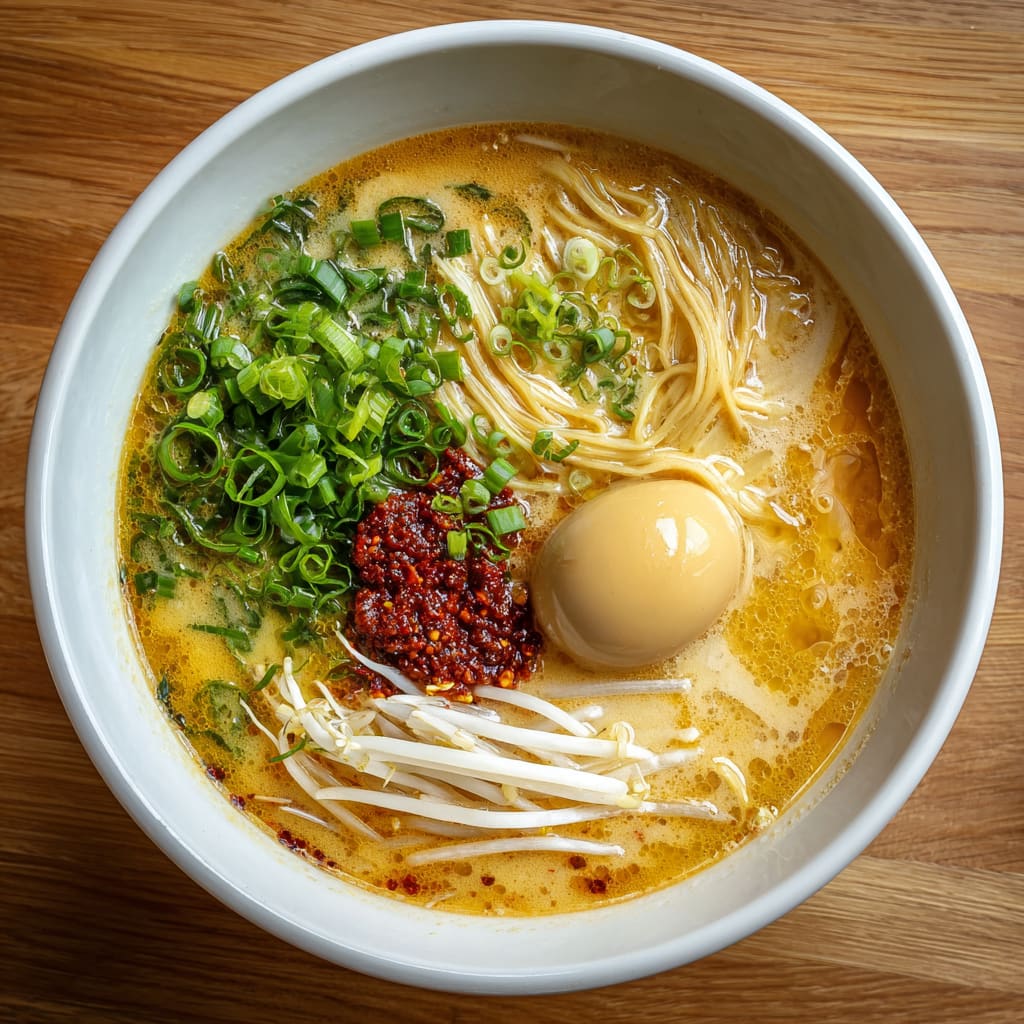
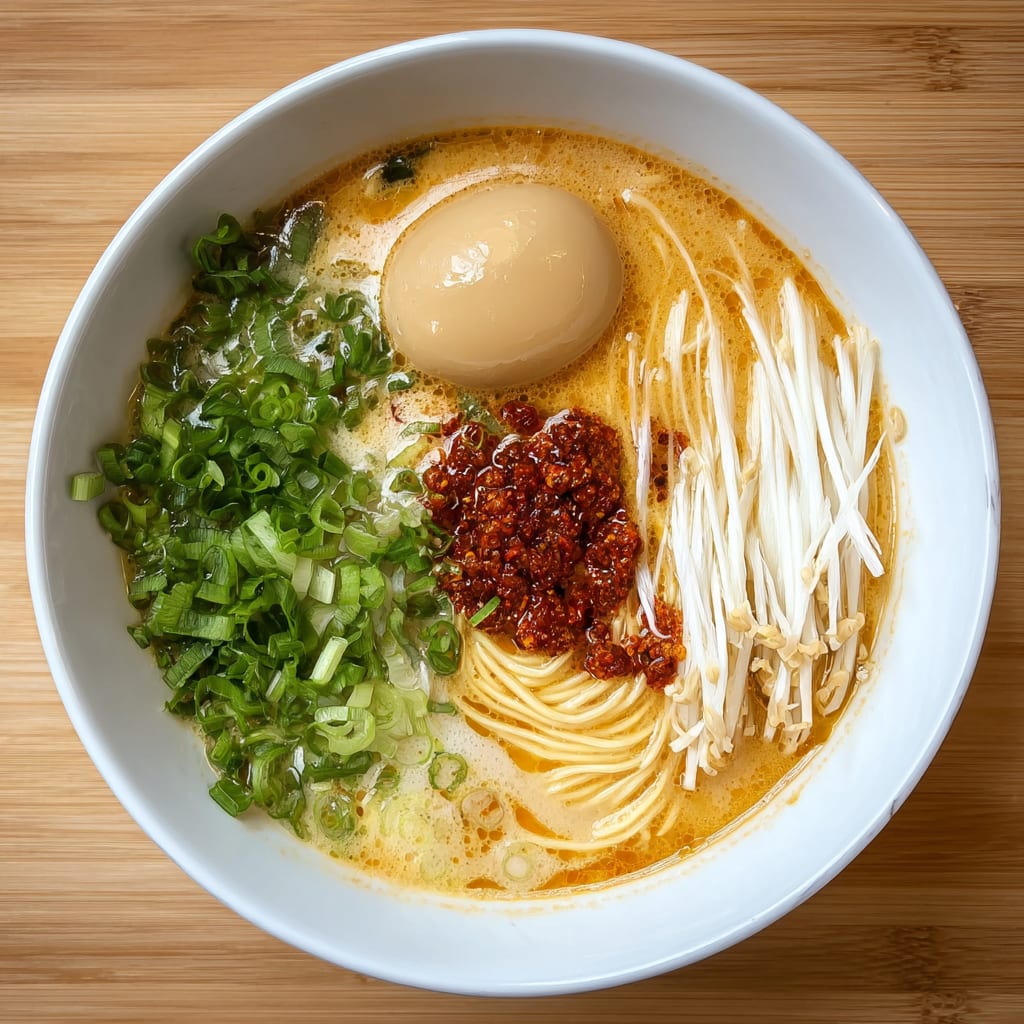
Imagine diving into a steaming bowl of silky, pork-infused broth that’s been simmered to milky perfection, topped with tender slices of chashu pork, springy noodles, and a perfectly soft-boiled egg. This Tonkotsu Ramen is the ultimate Japanese comfort food that balances rich flavors with delicate textures. A labor of love that’s worth every minute, this authentic Tonkotsu Ramen transforms simple ingredients into a restaurant-worthy meal that will transport you straight to the bustling ramen shops of Japan. You’ll learn how to create that signature cloudy, collagen-rich broth that’s the hallmark of perfect pork bone ramen, along with all the traditional toppings that make this dish so irresistible.
Why You’ll Love This Recipe
This homemade Tonkotsu Ramen recipe delivers an authentic Japanese dining experience right in your kitchen. The incredible depth of flavor comes from slowly simmering pork bones until they release their collagen, creating that signature creamy, opaque broth that coats your mouth with each spoonful. The contrast between the velvety broth and the chewy, springy ramen noodles creates a textural symphony that’s utterly satisfying.
Unlike some intimidating Japanese recipes, this pork bone ramen breaks down the process into manageable steps that even first-time ramen makers can follow. The rich umami flavor profile is unmatched by any store-bought alternative, and the customizable toppings mean everyone at your table can create their perfect bowl. There’s something magical about the way the fat emulsifies into the broth, creating that distinctive silky mouthfeel that ramen enthusiasts travel miles to experience. Best of all, while this Tonkotsu Ramen requires patience, most of the cooking time is hands-off, allowing you to fill your home with mouthwatering aromas while you go about your day.
Ingredients
For the Tonkotsu Broth:
- 4 pounds (1.8 kg) pork bones (trotters, neck bones, or backbone)
- 2 pounds (900 g) chicken backs or feet (optional, for added richness)
- 2 tablespoons vegetable oil
- 1 large onion, halved
- 2 carrots, roughly chopped
- 2 celery stalks, roughly chopped
- 6 garlic cloves, smashed
- 2-inch (5 cm) piece ginger, sliced
- 2 green onions, white parts only
- 2 tablespoons sesame oil
- 1 tablespoon white pepper
For the Chashu Pork:
- 2 pounds (900 g) pork belly, rolled and tied
- 1/4 cup (60 ml) soy sauce
- 1/4 cup (60 ml) mirin
- 1/4 cup (60 ml) sake
- 2 tablespoons sugar
- 2 green onions, roughly chopped
- 3 garlic cloves, smashed
- 1-inch (2.5 cm) piece ginger, sliced
For Assembly:
- 4 portions of fresh ramen noodles (about 1.2 pounds/540 g)
- 4 soft-boiled eggs, marinated in soy sauce (ajitama)
- 1 cup thinly sliced green onions
- 2 sheets nori, cut into quarters
- 1/2 cup bean sprouts, blanched
- 1/4 cup wood ear mushrooms, rehydrated and sliced
- Toasted sesame seeds, for garnish
- Chili oil or la-yu, to taste
Pro Tips
Achieving that perfect milky Tonkotsu Ramen broth requires a few essential techniques that separate good ramen from extraordinary ramen. First, always blanch your bones before making the actual broth. Cover the bones with cold water, bring to a boil, and let them cook for 5-10 minutes. You’ll notice scum and impurities rising to the surface. Drain, rinse the bones thoroughly under cold water, and scrub away any remaining impurities. This crucial step eliminates off-flavors and results in a cleaner-tasting broth.
The vigorous rolling boil is non-negotiable for authentic pork bone ramen. Unlike most stocks that simmer gently, Tonkotsu Ramen broth must be boiled rapidly for hours to emulsify the fat and collagen from the bones into the water, creating that signature cloudy appearance. Keep it at a rolling boil and top up with water as needed to maintain the level.
Finally, master the art of the ajitama (marinated soft-boiled egg). Bring water to a boil, gently lower room-temperature eggs into the water, and cook for exactly 6 minutes and 30 seconds. Immediately transfer to an ice bath. Once cool, peel carefully and marinate in a mixture of 1/4 cup soy sauce, 1/4 cup mirin, and 1 cup water for at least 4 hours or overnight for that perfect seasoned, jammy egg that elevates your Tonkotsu Ramen to restaurant quality.
Instructions
Step 1: Prepare the Bones
Begin by thoroughly rinsing your pork bones under cold water. Place them in a large pot, cover with cold water, and bring to a boil over high heat. Let them boil for 5-10 minutes until you see impurities and scum floating to the surface. Drain the bones in a colander and rinse each piece thoroughly under cold running water, scrubbing away any dark bits. This critical blanching process removes impurities that would cloud your broth with off-flavors.
Step 2: Start the Tonkotsu Broth
In your largest stockpot, heat 2 tablespoons of vegetable oil over medium-high heat. Add the onion (cut-side down), carrots, and celery, and cook until they develop a nice char, about 5-7 minutes. Add the garlic, ginger, and green onion whites, cooking for another minute until fragrant. Now add your cleaned bones to the pot and fill with cold water until everything is covered by about 2 inches. Bring this mixture to a boil.
Step 3: Develop the Broth
Once boiling, reduce the heat slightly to maintain a rolling boil (not a gentle simmer). This vigorous boil is essential for creating the emulsion that gives Tonkotsu Ramen its distinctive creamy appearance. Let it boil for 8-12 hours, checking periodically and adding more water as needed to keep the bones submerged. The liquid will gradually turn milky white as the collagen and fat break down. During the final hour, add the white pepper and sesame oil.
Step 4: Prepare the Chashu Pork
While the broth simmers, make your chashu. Combine soy sauce, mirin, sake, sugar, green onions, garlic, and ginger in a pot just large enough to hold your rolled pork belly. Add the pork belly and enough water to nearly cover it. Bring to a simmer, cover with a lid, and cook on low heat for 2-3 hours until the pork is tender enough to pierce easily with a knife. Let the pork cool in its cooking liquid, then refrigerate overnight for easier slicing.
Step 5: Strain and Finish the Broth
After 8-12 hours of boiling, your broth should be rich and milky. Strain it through a fine-mesh sieve lined with cheesecloth into another large pot, pressing on the solids to extract maximum flavor. Skim excess fat from the top if desired (though some fat is essential for authentic flavor). Taste and adjust seasoning with salt. Keep the broth hot while you prepare the remaining components.
Step 6: Assemble Your Ramen Bowls
Cook your fresh ramen noodles according to package directions, typically just 1-2 minutes in boiling water. Drain well and divide among four warmed ramen bowls. Ladle the hot Tonkotsu Ramen broth over the noodles. Arrange thinly sliced chashu pork, halved ajitama eggs, bean sprouts, sliced green onions, wood ear mushrooms, and nori on top. Finish with a sprinkle of toasted sesame seeds and a drizzle of chili oil if desired. Serve immediately while the broth is steaming hot.
Variations
For a lighter yet still authentic alternative, try Chicken Tonkotsu fusion. Replace half the pork bones with chicken backs and feet for a less intense but still creamy broth. The chicken adds a subtle sweetness that balances beautifully with the pork and might be more approachable for those new to Tonkotsu Ramen. Garnish with shredded chicken instead of chashu for a poultry-focused bowl.
Vegetarians can enjoy a mushroom-based “Tonkotsu-style” ramen that mimics the rich mouthfeel without any meat. Create a broth using 2 pounds of assorted mushrooms (shiitake, king oyster, and button), roasted until golden, then simmered with kombu, white miso paste, and soy milk for creaminess. The result isn’t traditional Tonkotsu Ramen, but delivers a surprisingly satisfying umami-rich alternative with a similar silky texture.
For spice enthusiasts, transform your bowl into Spicy Miso Tonkotsu by whisking 3 tablespoons of red miso paste and 1-2 tablespoons of doubanjiang (spicy bean paste) into your finished broth. This variation, popular in Hokkaido, adds complexity and heat that cuts through the richness of traditional pork bone ramen.
Storage and Serving
The Tonkotsu Ramen broth actually improves with age and can be stored in airtight containers in the refrigerator for up to 5 days. A layer of fat will solidify on top – this natural seal helps preserve the broth. Simply remove as much or as little as you want when reheating. For longer storage, freeze the broth in portion-sized containers for up to 3 months. The chashu pork keeps refrigerated for 3-4 days and also freezes beautifully for future ramen cravings.
For an elevated serving experience, warm your ramen bowls by filling them with hot water for a minute before emptying and adding your components. This keeps your Tonkotsu Ramen steaming hot from first to last bite. Serve with traditional accompaniments like Japanese pickles (tsukemono) and a small dish of toasted sesame seeds for guests to sprinkle as desired.
Create a ramen bar experience at home by setting out small dishes of additional toppings like kimchi, corn kernels, butter, extra sliced green onions, and various chili oils. This interactive serving style makes your Tonkotsu Ramen dinner both impressive and fun as everyone customizes their perfect bowl.
FAQs
Can I make Tonkotsu Ramen broth in a pressure cooker?
Yes, though the texture differs slightly from the traditional method. Blanch the bones first, then pressure cook on high for 2 hours. For the most authentic results, transfer to a regular pot after pressure cooking and boil rapidly for an additional hour to achieve that signature emulsion.
What if my broth isn’t milky white after cooking?
The milkiness comes from a vigorous, rolling boil that emulsifies the fat and collagen. If your broth isn’t milky enough, increase the heat to maintain a stronger boil and continue cooking. In some cases, blending a cup of the broth with an immersion blender and returning it to the pot can help achieve that creamy appearance.
Can I use different noodles if I can’t find fresh ramen noodles?
Fresh ramen noodles are ideal for Tonkotsu Ramen because of their alkaline quality and springy texture. In a pinch, you can substitute with fresh Chinese egg noodles. Dried ramen will work, but avoid the instant varieties with flavor packets. Look for plain dried ramen noodles or Chinese wheat noodles.
How do I prevent the broth from reducing too much during the long cooking time?
Keep a kettle of hot water nearby and periodically add water to maintain the original level. It’s best to add hot rather than cold water to maintain the boiling temperature.
What’s the best cut of pork for making Tonkotsu broth?
Collagen-rich cuts make the best broth. Trotters (pig’s feet), neck bones, and backbone are ideal. The more joints and connective tissue, the creamier your Tonkotsu Ramen broth will become. Avoid using too many meat cuts without bones as they won’t contribute enough to the signature texture.
Tonkotsu Ramen Recipe
- Prep Time: 15 mins
- Cook Time: 30 mins
- Total Time: 45 mins
- Yield: 4 servings 1x
- Category: Dinner
- Method: Cooking
- Cuisine: Americaine
Description
Learn how to make authentic Tonkotsu Ramen Recipe at home with our easy step-by-step guide. Try it today!
Ingredients
- 4 pounds (1.8 kg) pork bones (trotters, neck bones, or backbone)
- 2 pounds (900 g) chicken backs or feet (optional, for added richness)
- 2 tablespoons vegetable oil
- 1 large onion, halved
- 2 carrots, roughly chopped
- 2 celery stalks, roughly chopped
- 6 garlic cloves, smashed
- 2-inch (5 cm) piece ginger, sliced
- 2 green onions, white parts only
- 2 tablespoons sesame oil
- 1 tablespoon white pepper
- 2 pounds (900 g) pork belly, rolled and tied
- 1/4 cup (60 ml) soy sauce
- 1/4 cup (60 ml) mirin
- 1/4 cup (60 ml) sake
- 2 tablespoons sugar
- 2 green onions, roughly chopped
- 3 garlic cloves, smashed
- 1-inch (2.5 cm) piece ginger, sliced
- 4 portions of fresh ramen noodles (about 1.2 pounds/540 g)
- 4 soft-boiled eggs, marinated in soy sauce (ajitama)
- 1 cup thinly sliced green onions
- 2 sheets nori, cut into quarters
- 1/2 cup bean sprouts, blanched
- 1/4 cup wood ear mushrooms, rehydrated and sliced
- Toasted sesame seeds, for garnish
- Chili oil or la-yu, to taste
Instructions
- Step 1: Prepare the Bones Begin by thoroughly rinsing your pork bones under cold water. Place them in a large pot, cover with cold water, and bring to a boil over high heat. Let them boil for 5-10 minutes until you see impurities and scum floating to the surface. Drain the bones in a colander and rinse each piece thoroughly under cold running water, scrubbing away any dark bits. This critical blanching process removes impurities that would cloud your broth with off-flavors.
- Step 2: Start the Tonkotsu Broth In your largest stockpot, heat 2 tablespoons of vegetable oil over medium-high heat. Add the onion (cut-side down), carrots, and celery, and cook until they develop a nice char, about 5-7 minutes. Add the garlic, ginger, and green onion whites, cooking for another minute until fragrant. Now add your cleaned bones to the pot and fill with cold water until everything is covered by about 2 inches. Bring this mixture to a boil.
- Step 3: Develop the Broth Once boiling, reduce the heat slightly to maintain a rolling boil (not a gentle simmer). This vigorous boil is essential for creating the emulsion that gives **Tonkotsu Ramen** its distinctive appearance. Let it boil for 8-12 hours, checking periodically and adding more water as needed to keep the bones submerged. The liquid will gradually turn milky white as the collagen and fat break down. During the final hour, add the white pepper and sesame oil.
- Step 4: Prepare the Chashu Pork While the broth simmers, make your chashu. Combine soy sauce, mirin, sake, sugar, green onions, garlic, and ginger in a pot just large enough to hold your rolled pork belly. Add the pork belly and enough water to nearly cover it. Bring to a simmer, cover with a lid, and cook on low heat for 2-3 hours until the pork is tender enough to pierce easily with a knife. Let the pork cool in its cooking liquid, then refrigerate overnight for easier slicing.
- Step 5: Strain and Finish the Broth After 8-12 hours of boiling, your broth should be rich and milky. Strain it through a fine-mesh sieve lined with cheesecloth into another large pot, pressing on the solids to extract maximum flavor. Skim excess fat from the top if desired (though some fat is essential for authentic flavor). Taste and adjust seasoning with salt. Keep the broth hot while you prepare the remaining components.
- Step 6: Assemble Your Ramen Bowls Cook your fresh ramen noodles according to package directions, typically just 1-2 minutes in boiling water. Drain well and divide among four warmed ramen bowls. Ladle the hot **Tonkotsu Ramen** broth over the noodles. Arrange thinly sliced chashu pork, halved ajitama eggs, bean sprouts, sliced green onions, wood ear mushrooms, and nori on top. Finish with a sprinkle of toasted sesame seeds and a drizzle of chili oil if desired. Serve immediately while the broth is steaming hot.
Notes
Fresh ingredients will always yield the best flavor results.
Nutrition
- Serving Size: 1 serving
- Calories: 300
- Sugar: 5g
- Sodium: 400mg
- Fat: 10g
- Saturated Fat: 3g
- Unsaturated Fat: 7g
- Trans Fat: 0g
- Carbohydrates: 40g
- Fiber: 5g
- Protein: 15g
- Cholesterol: 50mg