
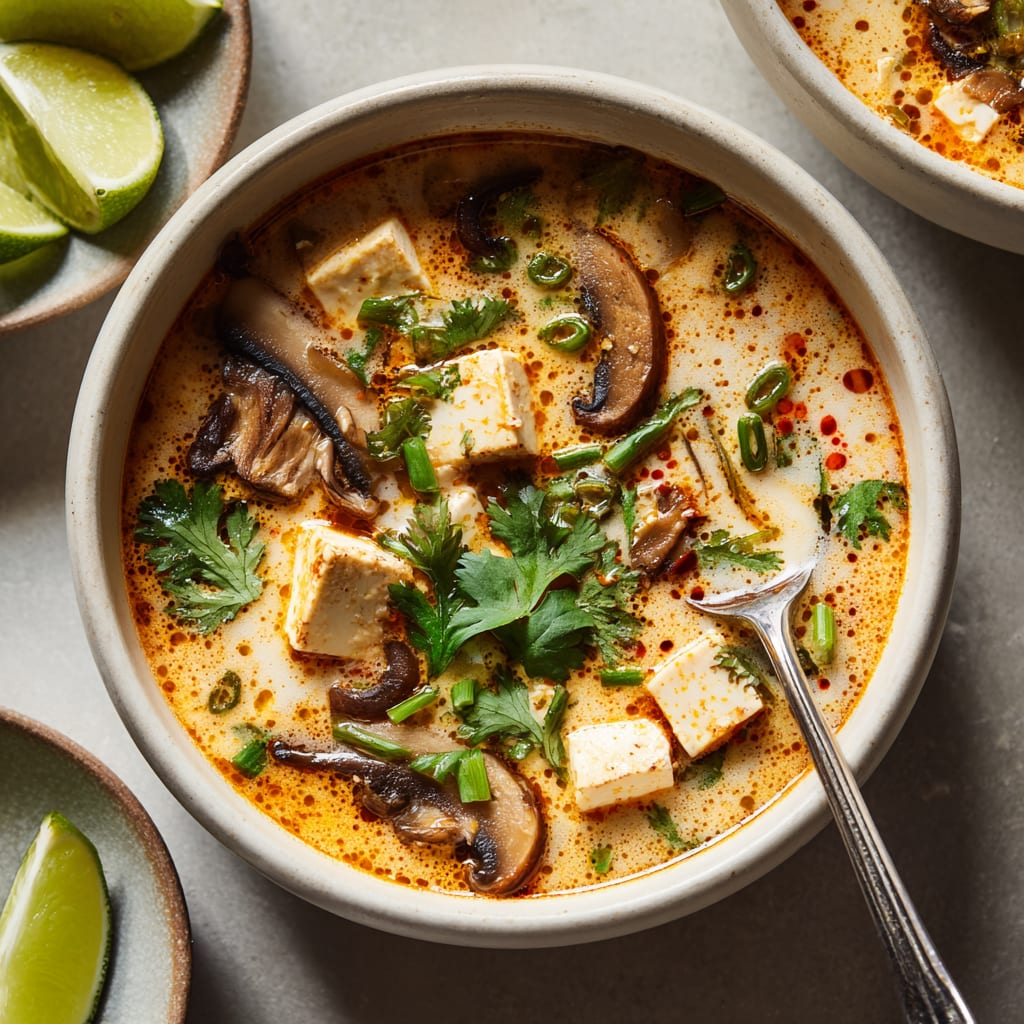
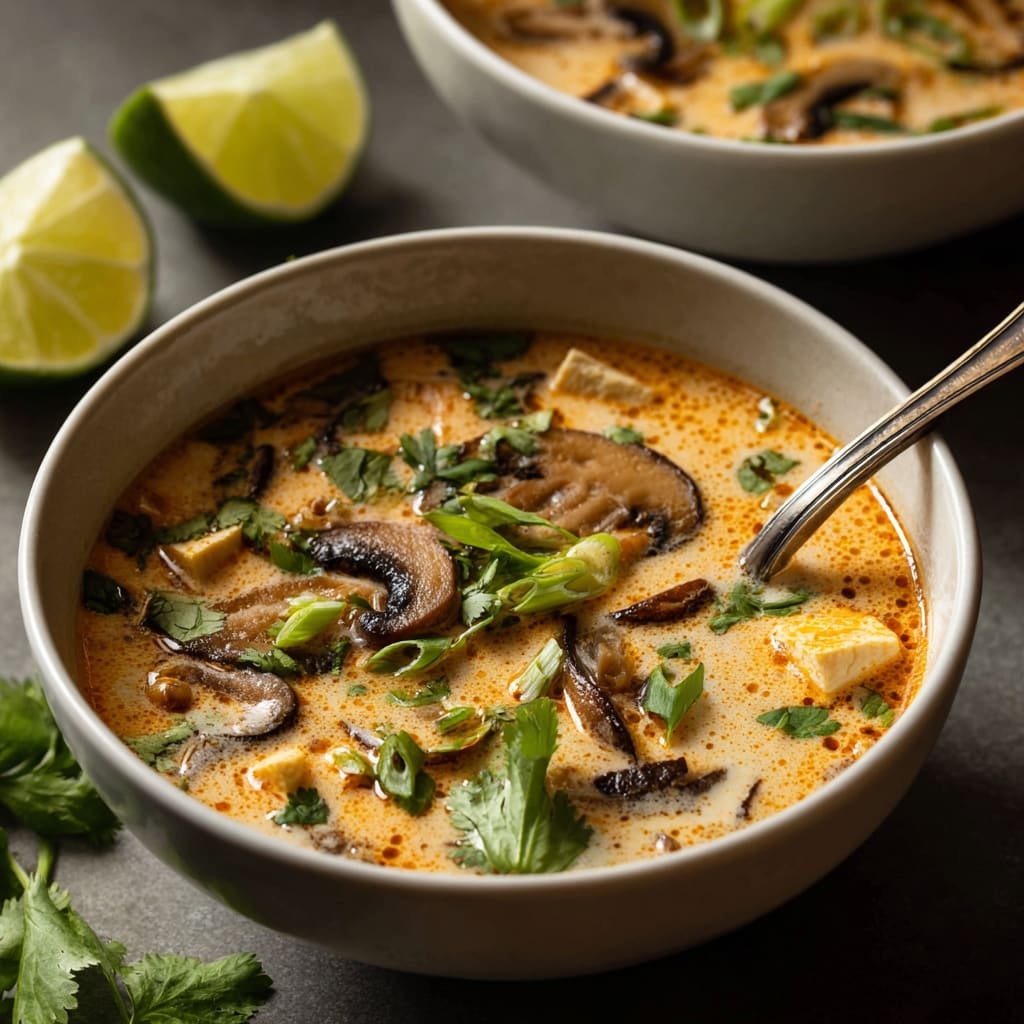
The fragrant aroma of lemongrass and coconut fills your kitchen as a pot of creamy, tangy Thai Coconut Soup simmers on your stove. This vibrant soup strikes the perfect balance between spicy, sweet, and sour flavors, creating a truly unforgettable culinary experience. Also known as Tom Kha Gai when made with chicken, this beloved Thai Coconut Soup has gained worldwide popularity for its complex yet harmonious flavor profile that somehow remains approachable for home cooks. You’ll learn how to create an authentic version of this Southeast Asian classic with readily available ingredients, master the key techniques that bring out its distinctive flavors, and discover ways to customize it to your personal preferences.
Why You’ll Love This Recipe
This Thai Coconut Soup recipe delivers restaurant-quality results with surprisingly little effort. The velvety coconut milk creates a luxurious mouthfeel that contrasts beautifully with the crisp vegetables and tender protein. Each spoonful offers an exciting flavor journey—first, the creamy coconut base coats your palate, followed by the bright citrus notes of lime, the aromatic lemongrass, and finally, a gentle warmth from the chili.
What makes this soup truly special is how quickly it comes together despite its complex flavor profile. In under 30 minutes, you’ll have a complete meal that tastes like it’s been simmering for hours. The soup is naturally gluten-free and can easily be adapted for vegan diets without sacrificing its authentic character.
Perhaps best of all, this Thai Coconut Soup recipe is forgiving for beginners but still impressive enough to serve guests. The ingredients work together to create something far greater than the sum of their parts, making this a foolproof way to explore Thai cuisine at home.
Ingredients
For your Thai Coconut Soup (4 servings), you’ll need:
- 2 cans (13.5 oz each) full-fat coconut milk
- 4 cups chicken or vegetable broth
- 3 stalks lemongrass, tough outer layers removed, bruised and cut into 4-inch pieces
- 6 thin slices galangal or ginger (about 1/4 cup)
- 6 kaffir lime leaves, torn (or 1 tablespoon lime zest)
- 2 tablespoons fish sauce (or soy sauce for vegetarian option)
- 2 tablespoons palm sugar or brown sugar
- 1-2 red Thai chilies, sliced (adjust to taste)
- 1 pound boneless chicken thighs, thinly sliced (or firm tofu for vegetarian option)
- 8 oz mushrooms, sliced (preferably shiitake or oyster)
- 1 red bell pepper, thinly sliced
- 2 tablespoons fresh lime juice
- 1/4 cup fresh cilantro, chopped
- 3 green onions, thinly sliced
- Salt to taste
Pro Tips
The soul of authentic Thai Coconut Soup lies in how you treat the aromatic ingredients. First, don’t skip the step of bruising the lemongrass—use the back of your knife to crush it slightly before cutting. This crucial technique releases the essential oils that give the soup its distinctive fragrance. Without this step, the lemongrass remains largely flavorless, regardless of how long you simmer it.
When working with coconut milk, avoid vigorous boiling which can cause it to separate. Instead, maintain a gentle simmer once the coconut milk is added. If you notice the soup beginning to separate, lower the heat immediately and stir gently to recombine. This approach preserves the soup’s silky texture that’s essential to a perfect Thai Coconut Soup.
Finally, practice restraint with the lime juice. Unlike other ingredients that can be added during cooking, always add lime juice at the very end, off the heat. Adding it too early exposes the juice to prolonged heat, which creates a bitter flavor that can overwhelm the delicate balance of the soup. For the brightest flavor, squeeze fresh limes just before serving.
Instructions
Step 1: Prepare the Aromatic Base
In a large pot over medium heat, combine 1 cup of coconut milk with lemongrass, galangal (or ginger), and kaffir lime leaves. Bring to a gentle simmer, stirring occasionally, and let these aromatics infuse the coconut milk for about 5 minutes. This creates the fragrant foundation that makes Thai Coconut Soup so distinctive.
Step 2: Build the Soup
Add the chicken or vegetable broth and the remaining coconut milk to the pot. Bring the mixture back to a gentle simmer, being careful not to let it boil rapidly. Stir in the fish sauce and palm sugar until completely dissolved. Add the sliced chilies according to your spice preference—remember you can always add more later, but you can’t take it away!
Step 3: Cook the Protein
Once your broth is simmering, add your chicken slices (or tofu) and cook gently for about 5-7 minutes until the chicken is fully cooked through or the tofu is heated. The protein will absorb the aromatic flavors while cooking, enhancing the overall depth of your Thai Coconut Soup.
Step 4: Add Vegetables
Add the mushrooms and red bell pepper to the pot. Allow them to simmer for 2-3 minutes until slightly softened but still maintaining some texture. The vegetables should be tender-crisp, providing a pleasant contrast to the creamy broth.
Step 5: Finish and Serve
Remove the pot from heat and discard the lemongrass pieces, galangal slices, and lime leaves (they’ve done their job flavoring the broth). Stir in the fresh lime juice, tasting and adjusting with more fish sauce, sugar, or lime juice as needed. Ladle your Thai Coconut Soup into bowls and garnish generously with fresh cilantro and sliced green onions.
Variations
Seafood Thai Coconut Soup: Transform this classic by substituting the chicken with a seafood medley. Use 1 pound of mixed shrimp, scallops, and firm white fish cut into bite-sized pieces. Add the seafood during the last 3-4 minutes of cooking to prevent overcooking. This variation brings a delightful oceanic sweetness that pairs beautifully with the coconut broth, creating a luxurious version of Thai Coconut Soup that’s perfect for special occasions.
Vegetable-Forward Thai Coconut Soup: Create a hearty vegetarian version by omitting the protein entirely and doubling down on vegetables. Add 1 cup of thinly sliced carrots, 1 cup of snow peas, and 1 cup of baby corn along with the mushrooms. For additional protein, stir in 1 cup of edamame beans during the last few minutes of cooking. Use soy sauce or salt instead of fish sauce to keep it vegetarian. This variation transforms the Thai Coconut Soup into a vibrant, nutrient-dense meal that satisfies even devoted meat-eaters.
Northern Thai Style: For a regionally-inspired twist, add 2 tablespoons of red curry paste when cooking the aromatic base and substitute chicken with 1 pound of ground pork. Include 1 cup of cherry tomatoes halved, adding them with the mushrooms. This creates a spicier, heartier version of Thai Coconut Soup that showcases the diverse regional interpretations of this beloved dish.
Storage and Serving
Thai Coconut Soup keeps beautifully in the refrigerator for up to 3 days in an airtight container, actually improving in flavor as the ingredients continue to meld. When reheating, do so gently over medium-low heat to prevent the coconut milk from separating. If freezing, omit the vegetables and add fresh ones when reheating for the best texture. The soup base can be frozen for up to 3 months—just thaw overnight in the refrigerator before gently reheating.
Serve your soup in deep bowls alongside a small plate of fresh garnishes—lime wedges, additional sliced chilies, and bean sprouts—allowing guests to customize their bowls. For a complete meal, pair with steamed jasmine rice on the side, which can be spooned into the soup or enjoyed separately to soak up the flavorful broth.
For an impressive dinner party presentation, serve the Thai Coconut Soup in a traditional Thai hot pot with a flame underneath to keep it warm throughout the meal. Accompany with small plates of fresh summer rolls or crispy Thai-style fish cakes for an authentic Southeast Asian dining experience.
FAQs
Can I make Thai Coconut Soup without lemongrass?
While lemongrass is key to authentic Thai Coconut Soup, in a pinch, you can substitute 1 tablespoon of lemongrass paste or 2 teaspoons of lemon zest plus 1 teaspoon of ginger. The flavor profile will be slightly different but still delicious.
Is Thai Coconut Soup spicy?
The heat level is entirely customizable. For a mild version, use just one de-seeded chili or omit it completely. For the traditional pleasant warmth, use 1-2 whole chilies. If you love heat, include the seeds or add more chilies to taste.
Can I use light coconut milk instead of full-fat?
While you can use light coconut milk, the soup won’t have the same rich, silky texture that makes traditional Thai Coconut Soup so satisfying. A better compromise is using one can of full-fat and one can of light coconut milk.
What’s the difference between Tom Kha and Tom Yum soup?
Tom Kha (which this Thai Coconut Soup recipe is based on) features coconut milk as its base, creating a creamy, rich soup. Tom Yum is clear, broth-based, and typically more sour and spicy without the coconut creaminess.
My soup curdled—can I fix it?
If your soup separates, try removing it from heat and gently whisking. For severe separation, transfer a cup of the soup to a blender, blend until smooth, then whisk it back into the pot. Prevent this issue by keeping your Thai Coconut Soup at a gentle simmer rather than a rolling boil.

Thai Coconut Soup
- Prep Time: 15 mins
- Cook Time: 30 mins
- Total Time: 45 mins
- Yield: 4 servings 1x
- Category: Dinner
- Method: Cooking
- Cuisine: Americaine
Description
Experience the comforting flavors of Thai Coconut Soup – Find tips for making this delicious recipe at home now! Try it today.
Ingredients
- 2 cans (13.5 oz each) full-fat coconut milk
- 4 cups chicken or vegetable broth
- 3 stalks lemongrass, tough outer layers removed, bruised and cut into 4-inch pieces
- 6 thin slices galangal or ginger (about 1/4 cup)
- 6 kaffir lime leaves, torn (or 1 tablespoon lime zest)
- 2 tablespoons fish sauce (or soy sauce for vegetarian option)
- 2 tablespoons palm sugar or brown sugar
- 1–2 red Thai chilies, sliced (adjust to taste)
- 1 pound boneless chicken thighs, thinly sliced (or firm tofu for vegetarian option)
- 8 oz mushrooms, sliced (preferably shiitake or oyster)
- 1 red bell pepper, thinly sliced
- 2 tablespoons fresh lime juice
- 1/4 cup fresh cilantro, chopped
- 3 green onions, thinly sliced
- Salt to taste
Instructions
- Step 1: Prepare the Aromatic Base In a large pot over medium heat, combine 1 cup of coconut milk with lemongrass, galangal (or ginger), and kaffir lime leaves. Bring to a gentle simmer, stirring occasionally, and let these aromatics infuse the coconut milk for about 5 minutes. This creates the fragrant foundation that makes Thai Coconut Soup so distinctive.
- Step 2: Build the Soup Add the chicken or vegetable broth and the remaining coconut milk to the pot. Bring the mixture back to a gentle simmer, being careful not to let it boil rapidly. Stir in the fish sauce and palm sugar until completely dissolved. Add the sliced chilies according to your spice preference—remember you can always add more later, but you can’t take it away!
- Step 3: Cook the Protein Once your broth is simmering, add your chicken slices (or tofu) and cook gently for about 5-7 minutes until the chicken is fully cooked through or the tofu is heated. The protein will absorb the aromatic flavors while cooking, enhancing the overall depth of your Thai Coconut Soup.
- Step 4: Add Vegetables Add the mushrooms and red bell pepper to the pot. Allow them to simmer for 2-3 minutes until slightly softened but still maintaining some texture. The vegetables should be tender-crisp, providing a pleasant contrast to the creamy broth.
- Step 5: Finish and Serve Remove the pot from heat and discard the lemongrass pieces, galangal slices, and lime leaves (they’ve done their job flavoring the broth). Stir in the fresh lime juice, tasting and adjusting with more fish sauce, sugar, or lime juice as needed. Ladle your Thai Coconut Soup into bowls and garnish generously with fresh cilantro and sliced green onions.
Notes
Fresh ingredients will always yield the best flavor results.
Nutrition
- Serving Size: 1 serving
- Calories: 300
- Sugar: 5g
- Sodium: 400mg
- Fat: 10g
- Saturated Fat: 3g
- Unsaturated Fat: 7g
- Trans Fat: 0g
- Carbohydrates: 40g
- Fiber: 5g
- Protein: 15g
- Cholesterol: 50mg