
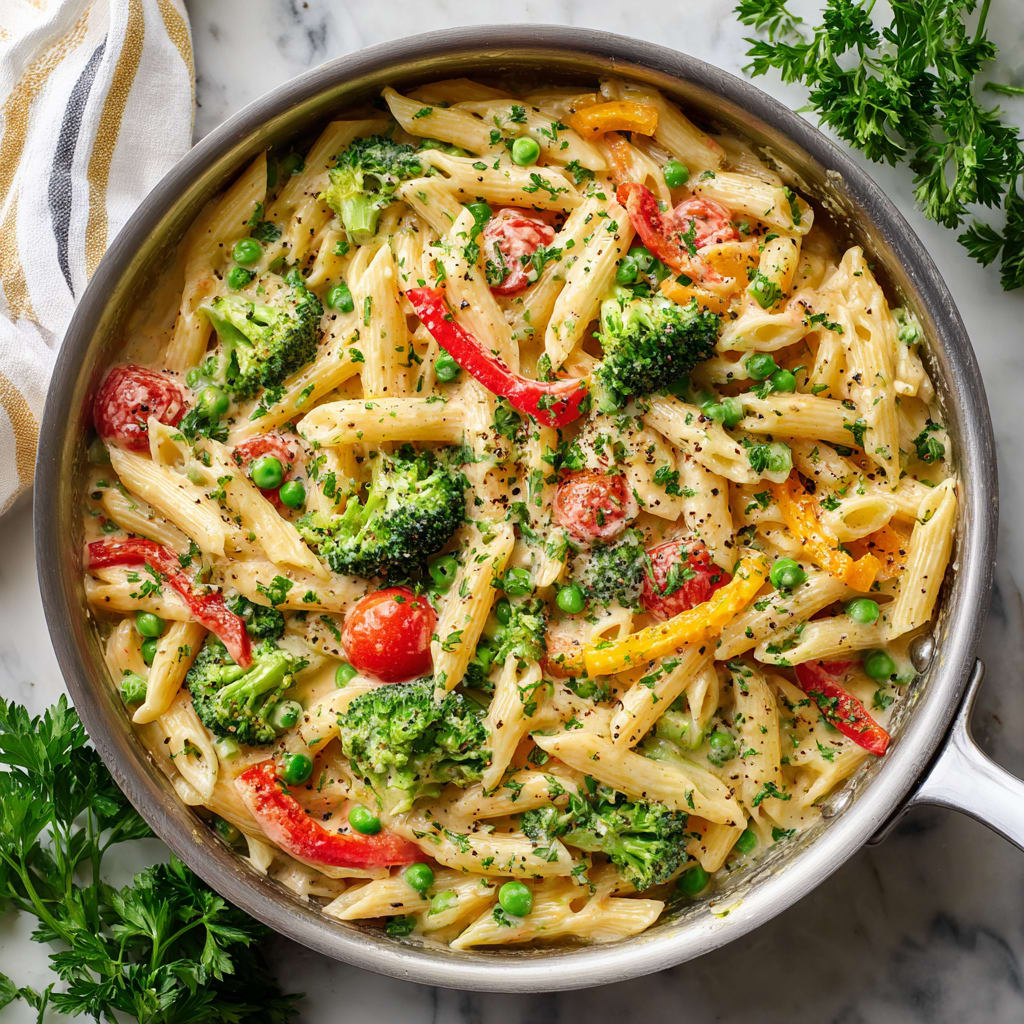
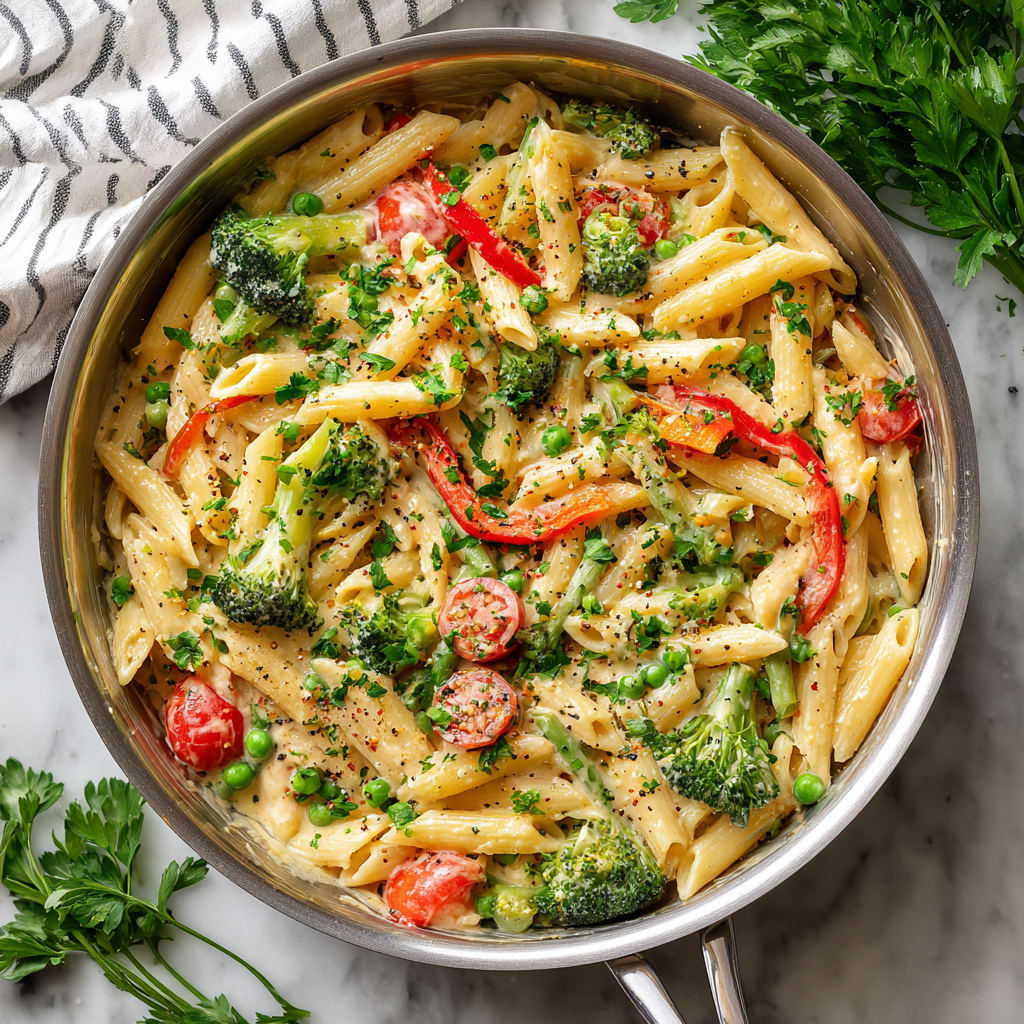
Vibrant, fresh, and bursting with colorful vegetables, this Pasta Primavera Recipe is a feast for both eyes and palate. The tender-crisp seasonal vegetables mingle perfectly with al dente pasta, all enveloped in a creamy, garlic-infused parmesan sauce that clings beautifully to every bite. This classic Italian-American dish celebrates the essence of spring (or “primavera” in Italian) with its rainbow of nutritious vegetables and comforting pasta base. Whether you’re looking for a meatless Monday option or a delightful vegetable pasta dish, this Pasta Primavera delivers exceptional flavor without complexity. You’ll learn how to perfectly cook each vegetable, create a silky smooth sauce, and bring it all together for a restaurant-quality meal right at home.
Why You’ll Love This Recipe
This Pasta Primavera Recipe stands out as a versatile crowd-pleaser that delivers on multiple fronts. The combination of textures is particularly delightful – from the slight crunch of perfectly cooked broccoli and bell peppers to the tender zucchini and the chewy pasta, each bite offers a satisfying contrast. The sauce achieves that elusive balance between richness and lightness – creamy and indulgent without being heavy, allowing the fresh vegetables to shine.
What makes this vegetable pasta primavera exceptional is its adaptability to seasons and preferences. You can easily customize the vegetables based on what looks best at your market or what’s growing in your garden. The cooking technique ensures each vegetable retains its unique texture and vibrant color – no soggy, lifeless vegetables here!
Moreover, despite its impressive appearance, this dish comes together efficiently, making it suitable for both weeknight dinners and special occasions. The entire meal exists in one pot, minimizing cleanup while maximizing flavor as the pasta absorbs the savory notes of the sauce and vegetables.
Ingredients List for the Pasta Primavera Recipe
These ingredients create the perfect balance of fresh vegetables, aromatic seasonings, and creamy texture that defines authentic Pasta Primavera. The combination of herbs and seasonings infuses the dish with classic Italian flavor profiles while the variety of vegetables provides nutritional value and visual appeal.
- 1 ¼ cups chicken broth
- 1 ¼ cups half and half
- ½ chicken bouillon cube
- 1 teaspoon soy sauce
- 1 teaspoon hot sauce
- ¾ teaspoons EACH: dried parsley, basil, oregano, mustard powder
- 1 pinch red pepper flakes
- 2 tablespoons olive oil
- 2 cups broccoli florets (cut into bite-sized pieces)
- ½ cup carrots (julienned)
- ½ cup red onion (sliced)
- 1 cup red bell pepper (sliced)
- ½ zucchini (cut into chunks (equal to 1 ½ cups))
- ½ cup frozen peas
- 1 cup cherry tomatoes (halved or quartered)
- Salt/pepper (to taste)
- 3 tablespoons butter
- 3 cloves garlic (minced)
- 3 tablespoons flour
- 1 cup freshly grated parmesan cheese
- ½ lb. ziti
- 2 tablespoons lemon juice
Pro Tips
For truly exceptional Pasta Primavera, these professional techniques will elevate your dish from good to outstanding:
Vegetable Timing Is Everything: The secret to perfect vegetable texture is adding them to the pan in stages based on cooking time. Start with denser vegetables like carrots, broccoli, and bell peppers that need longer cooking, then add quick-cooking vegetables like zucchini, peas, and tomatoes later. This ensures each vegetable retains its optimal texture – tender-crisp rather than mushy or undercooked.
Master the Roux Technique: The foundation of your creamy sauce depends on properly cooking the flour with butter. Whisk continuously during this step for 2 full minutes to eliminate any raw flour taste. This creates the perfect base for a silky, lump-free sauce that will beautifully coat both pasta and vegetables.
Don’t Overcook the Pasta: For restaurant-quality pasta primavera, cook the pasta to true al dente (slightly firm when bitten). Since the pasta will continue cooking slightly when combined with the hot sauce and vegetables, aim for 1 minute less than package directions suggest. This prevents the pasta from becoming soggy when everything is tossed together in the final steps.
Instructions
Step 1: Combine the sauce ingredients in a large measuring cup with a spout and set aside. Measure out remaining ingredients before beginning.
Step 2: Begin boiling a large pot of water for the pasta. Once a boil is reached, stir in ½ tablespoon salt.
Step 3: Heat olive oil in a large skillet over medium-high heat. Add the broccoli, onions, carrots, and bell peppers and cook for 3 minutes.
Step 4: Add the zucchini, peas, and tomatoes. Season the vegetables with salt and pepper and cook for 2-3 minutes. Remove and set aside.
Step 5: Add the butter and garlic in the same skillet over medium heat. Add the flour and stir continuously for 2 minutes.
Step 6: Add the sauce mixture (from step 1) in small splashes, stirring continuously. Bring to a boil, then reduce to a simmer.
Step 7: Cover partially while you cook the pasta to al dente according to package instructions. Drain once cooked.
Step 8: Reduce heat of the sauce to low and gradually sprinkle in the parmesan cheese until combined, then stir in the lemon juice.
Step 9: Add the drained pasta and stir to combine. Add the vegetables back and toss to combine and heat through.
Step 10: Remove from heat and serve with freshly cracked pepper and fresh lemon slices.
Variations
This versatile Pasta Primavera Recipe easily adapts to different dietary needs and flavor preferences:
Protein-Packed Primavera: Transform this vegetarian pasta primavera into a heartier meal by adding protein. Grilled chicken breast, sautéed shrimp, or Italian sausage work beautifully. For vegetarian protein options, consider adding white beans, chickpeas, or pan-fried tofu cubes. Simply cook your protein separately and fold it in with the vegetables in the final step.
Dairy-Free Adaptation: Create a delicious dairy-free version by replacing the half and half with full-fat coconut milk or your favorite plant-based cream alternative. Substitute the parmesan cheese with nutritional yeast or dairy-free cheese. The sauce will still be luxuriously creamy with a slightly different but equally delicious flavor profile.
Seasonal Vegetable Swap: Adapt this Pasta Primavera to any season by using what’s freshest. Try asparagus, green peas, and artichokes in spring; summer squash, corn, and eggplant in summer; butternut squash, kale, and Brussels sprouts in fall/winter. The cooking technique remains the same—just adjust cooking times according to vegetable density.
Storage and Serving
Storage Instructions: This Pasta Primavera keeps well when properly stored. Allow leftovers to cool completely before transferring to airtight containers. Refrigerate for up to 3-4 days. The pasta may absorb some of the sauce during storage, so when reheating, add a small splash of chicken broth or milk to restore creaminess. For best texture, reheat gently in a skillet over medium-low heat rather than microwaving, which can make the pasta mushy and the vegetables overcooked.
Serving Suggestions: Serve this vibrant Pasta Primavera as a complete meal or alongside complementary dishes. A simple Caesar salad or arugula with lemon vinaigrette makes a perfect starter. For an elegant presentation, serve in warmed pasta bowls garnished with additional fresh herbs, lemon wedges, and a light dusting of freshly grated parmesan. Pair with a crisp white wine like Pinot Grigio or Sauvignon Blanc to complement the creamy sauce and fresh vegetables.
FAQs
Can I make Pasta Primavera ahead of time?
You can prepare components ahead of time, but complete assembly just before serving for best results. Pre-chop vegetables and refrigerate up to 24 hours ahead. The sauce can be made up to 2 days in advance and gently reheated. Cook pasta fresh, then combine with reheated sauce and vegetables just before serving.
Is Pasta Primavera traditionally vegetarian?
Yes, classic Pasta Primavera is vegetarian, focusing on fresh seasonal vegetables. However, many variations include chicken, shrimp, or Italian sausage. The essential elements are the pasta, fresh vegetables, and a creamy or light sauce.
Can I use different pasta shapes?
Absolutely! While this recipe uses ziti, any medium pasta shape works well. Penne, farfalle (bow ties), fusilli, or rotini are excellent alternatives as their shapes catch the sauce and small pieces of vegetables beautifully.
Why is my sauce too thick/thin?
For too thick sauce, add additional warm chicken broth or half and half in small amounts until desired consistency. If too thin, simmer uncovered for a few minutes longer or create a slurry with 1 teaspoon cornstarch and 1 tablespoon cold water, then stir in while sauce simmers.
Can I make this dish gluten-free?
Yes, use your favorite gluten-free pasta and substitute the all-purpose flour with a gluten-free flour blend or cornstarch (use 2 tablespoons cornstarch instead of 3 tablespoons flour). Ensure your bouillon cube and soy sauce are also gluten-free, as some brands contain wheat.
Pasta Primavera Recipe
- Prep Time: 15 mins
- Cook Time: 30 mins
- Total Time: 45 mins
- Yield: 4 people 1x
- Category: Dinner
- Method: Cooking
- Cuisine: American
Description
Looking for a delicious and healthy meal idea? Try this Pasta Primavera Recipe today! Discover a new favorite dish.
Ingredients
- 1 ¼ cups chicken broth
- 1 ¼ cups half and half
- ½ chicken bouillon cube
- 1 teaspoon soy sauce
- 1 teaspoon hot sauce
- ¾ teaspoons EACH: dried parsley, basil, oregano, mustard powder
- 1 pinch red pepper flakes
- 2 tablespoons olive oil
- 2 cups broccoli florets (cut into bite-sized pieces)
- ½ cup carrots (julienned)
- ½ cup red onion (sliced)
- 1 cup red bell pepper (sliced)
- ½ zucchini (cut into chunks (equal to 1 ½ cups))
- ½ cup frozen peas
- 1 cup cherry tomatoes (halved or quartered)
- Salt/pepper (to taste)
- 3 tablespoons butter
- 3 cloves garlic (minced)
- 3 tablespoons flour
- 1 cup freshly grated parmesan cheese
- ½ lb. ziti
- 2 tablespoons lemon juice
Instructions
- Step 1: Combine the sauce ingredients in a large measuring cup with a spout and set aside. Measure out remaining ingredients before beginning.
- Step 2: Begin boiling a large pot of water for the pasta. Once a boil is reached, stir in ½ tablespoon salt.
- Step 3: Heat olive oil in a large skillet over medium-high heat. Add the broccoli, onions, carrots, and bell peppers and cook for 3 minutes.
- Step 4: Add the zucchini, peas, and tomatoes. Season the vegetables with salt and pepper and cook for 2-3 minutes. Remove and set aside.
- Step 5: Add the butter and garlic in the same skillet over medium heat. Add the flour and stir continuously for 2 minutes.
- Step 6: Add the sauce mixture (from step 1) in small splashes, stirring continuously. Bring to a boil, then reduce to a simmer.
- Step 7: Cover partially while you cook the pasta to al dente according to package instructions. Drain once cooked.
- Step 8: Reduce heat of the sauce to low and gradually sprinkle in the parmesan cheese until combined, then stir in the lemon juice.
- Step 9: Add the drained pasta and stir to combine. Add the vegetables back and toss to combine and heat through.
- Step 10: Remove from heat and serve with freshly cracked pepper and fresh lemon slices.
Notes
Try This Recipe and Leave a comment Below, your opinion matters to me!
Nutrition
- Serving Size: 4 serving
- Calories: 400
- Sugar: 5g
- Sodium: 400mg
- Fat: 10g
- Saturated Fat: 3g
- Unsaturated Fat: 7g
- Trans Fat: 0g
- Carbohydrates: 40g
- Fiber: 5g
- Protein: 15g
- Cholesterol: 50mg