

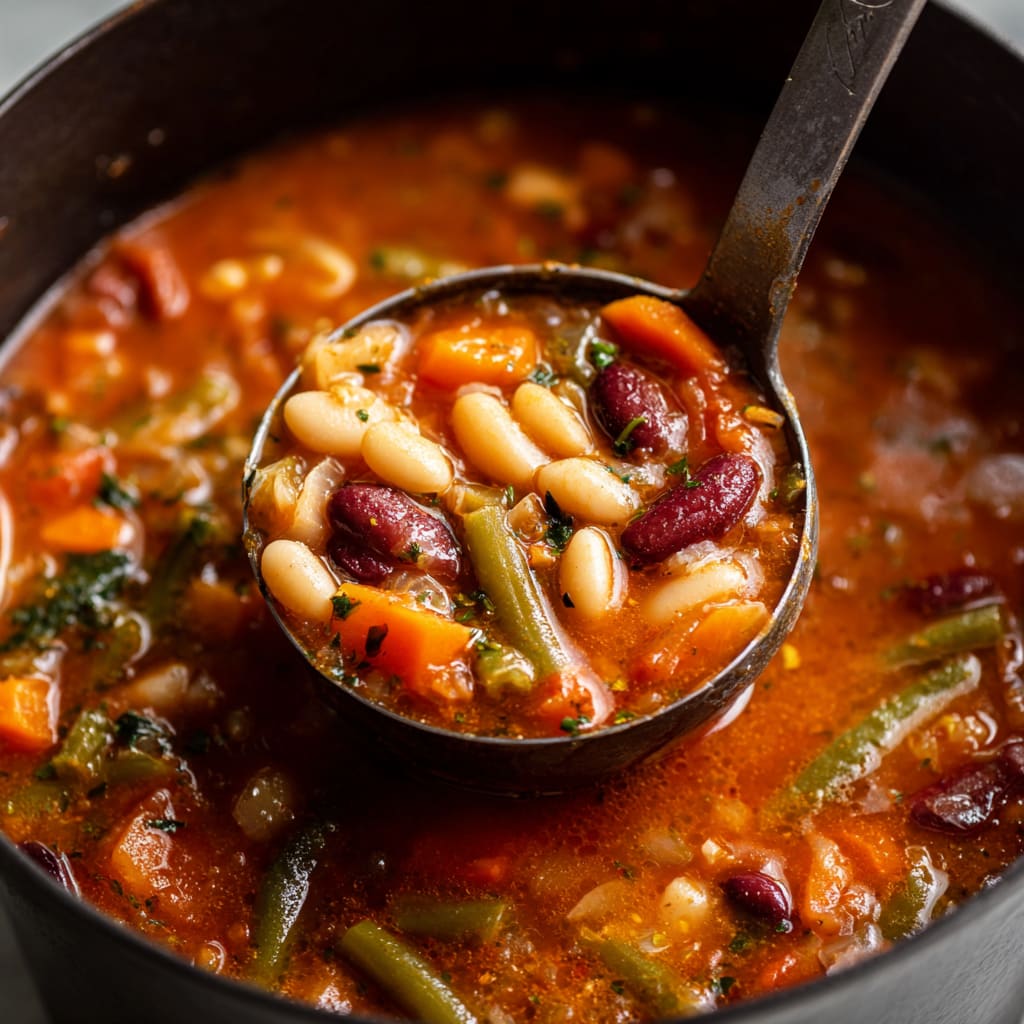
Steam rises from a hearty bowl of Minestrone Soup, carrying the aromatic blend of garden-fresh vegetables, fragrant herbs, and savory broth that warms you from the inside out. This classic Italian Minestrone Soup is the ultimate comfort food that combines nutritious vegetables, beans, and pasta into one satisfying meal. Unlike ordinary vegetable soups, authentic Minestrone Soup balances rustic simplicity with complex flavors that have evolved over centuries in Italian kitchens. You’ll learn how to create this nourishing one-pot wonder that’s endlessly customizable while staying true to its Mediterranean roots.
Why You’ll Love This Recipe
This Minestrone Soup recipe strikes the perfect balance between wholesome nutrition and incredible flavor. The combination of tender vegetables, hearty beans, and al dente pasta creates a delightful textural contrast in every spoonful – from the slight bite of celery to the velvety softness of cannellini beans.
The soup develops a remarkable depth of flavor as the ingredients simmer together, creating a rich, savory broth that’s simultaneously light and satisfying. Unlike canned versions, this homemade vegetable minestrone allows you to control the sodium level while enjoying vibrant, fresh ingredients.
Perhaps the greatest appeal of this Minestrone Soup is its versatility. You can easily adapt it to any season, dietary preference, or what’s available in your pantry. It’s a forgiving recipe that welcomes substitutions while consistently delivering comforting, nourishing results that improve with time as the flavors meld together.
Ingredients
For this classic Minestrone Soup, you’ll need:
- 2 tablespoons (30ml) olive oil
- 1 large onion, diced (about 1 cup)
- 2 medium carrots, diced (about 1 cup)
- 2 celery stalks, diced (about ¾ cup)
- 3 cloves garlic, minced
- 1 zucchini, diced (about 1 cup)
- 1 potato, peeled and diced (about 1 cup)
- 1 can (14.5oz/411g) diced tomatoes
- 1 can (15oz/425g) cannellini beans, drained and rinsed
- 6 cups (1.4L) vegetable broth
- 1 bay leaf
- 1 teaspoon dried oregano
- 1 teaspoon dried basil
- ½ cup (85g) small pasta (like ditalini or elbow)
- 2 cups (60g) fresh spinach, chopped
- ¼ cup (25g) grated Parmesan cheese, plus more for serving
- Salt and pepper to taste
- 2 tablespoons fresh parsley, chopped
Use high-quality canned tomatoes as they form the base of the broth’s flavor. For authentic Italian minestrone, look for Parmigiano-Reggiano cheese for its nutty depth.
Pro Tips
Build Your Flavor Base Properly: Start by sautéing your onions, carrots, and celery (the Italian soffritto) until they’re soft but not browned. This aromatic foundation is crucial for developing the complex flavor of authentic Minestrone Soup. Give this step at least 5-7 minutes – rushing here will result in less flavorful soup.
Add Pasta at the Right Time: Never add the pasta too early or your Minestrone Soup will become mushy and cloudy. Add the pasta about 10-12 minutes before serving so it cooks to al dente perfection. If you plan to have leftovers, consider cooking the pasta separately and adding it to individual bowls to prevent it from absorbing too much broth during storage.
Finish with Quality Ingredients: The final touches make all the difference. A drizzle of high-quality extra virgin olive oil, freshly grated Parmesan, and torn basil leaves added just before serving transform a good Minestrone Soup into an exceptional one. These finishing elements add brightness, richness, and complexity that elevate the entire dish.
Instructions
Step 1: Prepare Your Soffritto
Heat olive oil in a large Dutch oven or heavy-bottomed pot over medium heat. Add the diced onions, carrots, and celery, stirring occasionally until the vegetables begin to soften, about 5-7 minutes. This classic Italian soffritto builds the flavor foundation of your Minestrone Soup. You’ll know it’s ready when the onions become translucent and everything smells fragrant.
Step 2: Add Aromatics and Additional Vegetables
Add the minced garlic and cook for 30 seconds until fragrant, being careful not to burn it. Then add the diced zucchini and potato, stirring to coat them with oil. Cook for an additional 2-3 minutes to begin developing their flavors. The layering of ingredients at different times is key to creating depth in your homemade minestrone.
Step 3: Add Liquids and Seasonings
Pour in the diced tomatoes with their juices and the vegetable broth. Add the bay leaf, dried oregano, and dried basil. Season with salt and pepper. Bring the mixture to a boil, then reduce heat to maintain a gentle simmer. Cover partially and let cook for about 15 minutes, or until the potatoes start to become tender.
Step 4: Add Beans and Pasta
Stir in the drained and rinsed cannellini beans and the pasta. Continue to simmer uncovered for 8-10 minutes, or until the pasta is al dente. Stir occasionally to prevent the pasta from sticking to the bottom of the pot. Your Minestrone Soup will start to thicken slightly as the pasta releases some starch.
Step 5: Finish with Greens and Cheese
Add the chopped spinach and stir until it wilts, about 1-2 minutes. Remove the bay leaf, then stir in the grated Parmesan cheese and fresh parsley. Taste and adjust seasoning if needed. Your Minestrone Soup is ready when all vegetables are tender but still maintain their shape and integrity.
Serve your Minestrone Soup hot with additional Parmesan cheese, a drizzle of good olive oil, and crusty bread for a complete Italian dining experience.
Variations
Seasonal Adaptations: Transform your Minestrone Soup with the changing seasons. For summer minestrone, replace potatoes with fresh green beans and add corn and fresh basil. In autumn, incorporate diced butternut squash, kale, and a pinch of nutmeg for warmth. The soup’s versatility makes it perfect for using whatever vegetables are at their peak.
Dietary Modifications: This classic soup easily accommodates different dietary needs. For a gluten-free Minestrone Soup, substitute the traditional pasta with gluten-free varieties or cooked quinoa. Create a heartier vegan version by omitting the Parmesan and adding nutritional yeast or a tablespoon of white miso paste to the broth for umami depth. For meat lovers, incorporate Italian sausage or pancetta at the soffritto stage for added richness and protein.
Regional Italian Variations: Explore Italy’s diverse culinary landscape through regional Minestrone Soup styles. Milanese minestrone includes rice instead of pasta and features more herbs. Genovese versions incorporate a spoonful of pesto before serving, while Tuscan minestrone often includes cabbage and is served over toasted bread rubbed with garlic.
Storage and Serving
Store leftover Minestrone Soup in airtight containers in the refrigerator for up to 5 days. The flavor actually improves after a day as the ingredients continue to meld. When reheating, add a splash of broth or water if the soup has thickened too much, as the pasta tends to absorb liquid during storage.
For longer preservation, freeze portions in freezer-safe containers for up to 3 months. For best results when freezing, slightly undercook the pasta and omit the spinach, adding fresh greens when reheating the thawed soup.
Serve your Minestrone Soup as a complete meal with crusty Italian bread and a drizzle of extra virgin olive oil. For a more substantial dinner, pair with a simple Caprese salad or an Italian antipasto plate featuring olives, cheeses, and cured meats. Transform leftovers into a new meal by pureeing a portion to create a thicker base, then adding fresh vegetables and herbs for a refreshed version of your original Minestrone Soup.
FAQs
Can I make Minestrone Soup in advance?
Yes! Minestrone Soup actually tastes better the next day as the flavors have time to develop. If preparing more than a day ahead, consider adding the pasta separately when reheating to prevent it from becoming too soft.
Is Minestrone Soup freezer-friendly?
Absolutely. Freeze portions for up to 3 months in airtight containers. The soup will thicken after freezing, so add a bit of broth when reheating. For best texture, slightly undercook pasta if you plan to freeze.
Can I use dried beans instead of canned?
Yes, but they’ll need to be soaked overnight and pre-cooked before adding to the Minestrone Soup. One cup of dried beans equals roughly three cups cooked.
What’s the best pasta shape for Minestrone?
Small shapes like ditalini, orzo, or small shells work best in Minestrone Soup as they’re bite-sized and cook quickly without overwhelming the other ingredients.
How can I make my Minestrone Soup thicker?
For a heartier Minestrone Soup, mash some of the beans before adding them, increase the amount of pasta, or blend a cup of the finished soup and return it to the pot. You can also simmer uncovered longer to reduce the liquid.

Minestrone Soup Recipe
- Prep Time: 15 minutes
- Cook Time: 30 minutes
- Total Time: 45 minutes
- Yield: 6 servings 1x
- Category: Dinner
- Method: Simmering
- Cuisine: Americaine
Description
Minestrone Soup Recipe packed with veggies, beans, and pasta, perfect for a quick, comforting meal.
Ingredients
- 2 tablespoons (30ml) olive oil
- 1 large onion, diced (about 1 cup)
- 2 medium carrots, diced (about 1 cup)
- 2 celery stalks, diced (about ¾ cup)
- 3 cloves garlic, minced
- 1 zucchini, diced (about 1 cup)
- 1 potato, peeled and diced (about 1 cup)
- 1 can (14.5oz/411g) diced tomatoes
- 1 can (15oz/425g) cannellini beans, drained and rinsed
- 6 cups (1.4L) vegetable broth
- 1 bay leaf
- 1 teaspoon dried oregano
- 1 teaspoon dried basil
- ½ cup (85g) small pasta (like ditalini or elbow)
- 2 cups (60g) fresh spinach, chopped
- ¼ cup (25g) grated Parmesan cheese, plus more for serving
- Salt and pepper to taste
- 2 tablespoons fresh parsley, chopped
Instructions
- Step 1: Prepare Your Soffritto Heat olive oil in a large Dutch oven or heavy-bottomed pot over medium heat. Add the diced onions, carrots, and celery, stirring occasionally until the vegetables begin to soften, about 5-7 minutes. This classic Italian soffritto builds the flavor foundation of your Minestrone Soup. You’ll know it’s ready when the onions become translucent and everything smells fragrant.
- Step 2: Add Aromatics and Additional Vegetables Add the minced garlic and cook for 30 seconds until fragrant, being careful not to burn it. Then add the diced zucchini and potato, stirring to coat them with oil. Cook for an additional 2-3 minutes to begin developing their flavors. The layering of ingredients at different times is key to creating depth in your homemade minestrone.
- Step 3: Add Liquids and Seasonings Pour in the diced tomatoes with their juices and the vegetable broth. Add the bay leaf, dried oregano, and dried basil. Season with salt and pepper. Bring the mixture to a boil, then reduce heat to maintain a gentle simmer. Cover partially and let cook for about 15 minutes, or until the potatoes start to become tender.
- Step 4: Add Beans and Pasta Stir in the drained and rinsed cannellini beans and the pasta. Continue to simmer uncovered for 8-10 minutes, or until the pasta is al dente. Stir occasionally to prevent the pasta from sticking to the bottom of the pot. Your Minestrone Soup will start to thicken slightly as the pasta releases some starch.
- Step 5: Finish with Greens and Cheese Add the chopped spinach and stir until it wilts, about 1-2 minutes. Remove the bay leaf, then stir in the grated Parmesan cheese and fresh parsley. Taste and adjust seasoning if needed. Your Minestrone Soup is ready when all vegetables are tender but still maintain their shape and integrity.
Notes
Fresh ingredients will always yield the best flavor results.
Nutrition
- Serving Size: 1.5 cups
- Calories: 250 calories
- Sugar: 8 grams
- Sodium: 800 mg
- Fat: 6 grams
- Saturated Fat: 2 grams
- Unsaturated Fat: 4 grams
- Trans Fat: 0 grams
- Carbohydrates: 40 grams
- Fiber: 8 grams
- Protein: 10 grams
- Cholesterol: 5 mg