
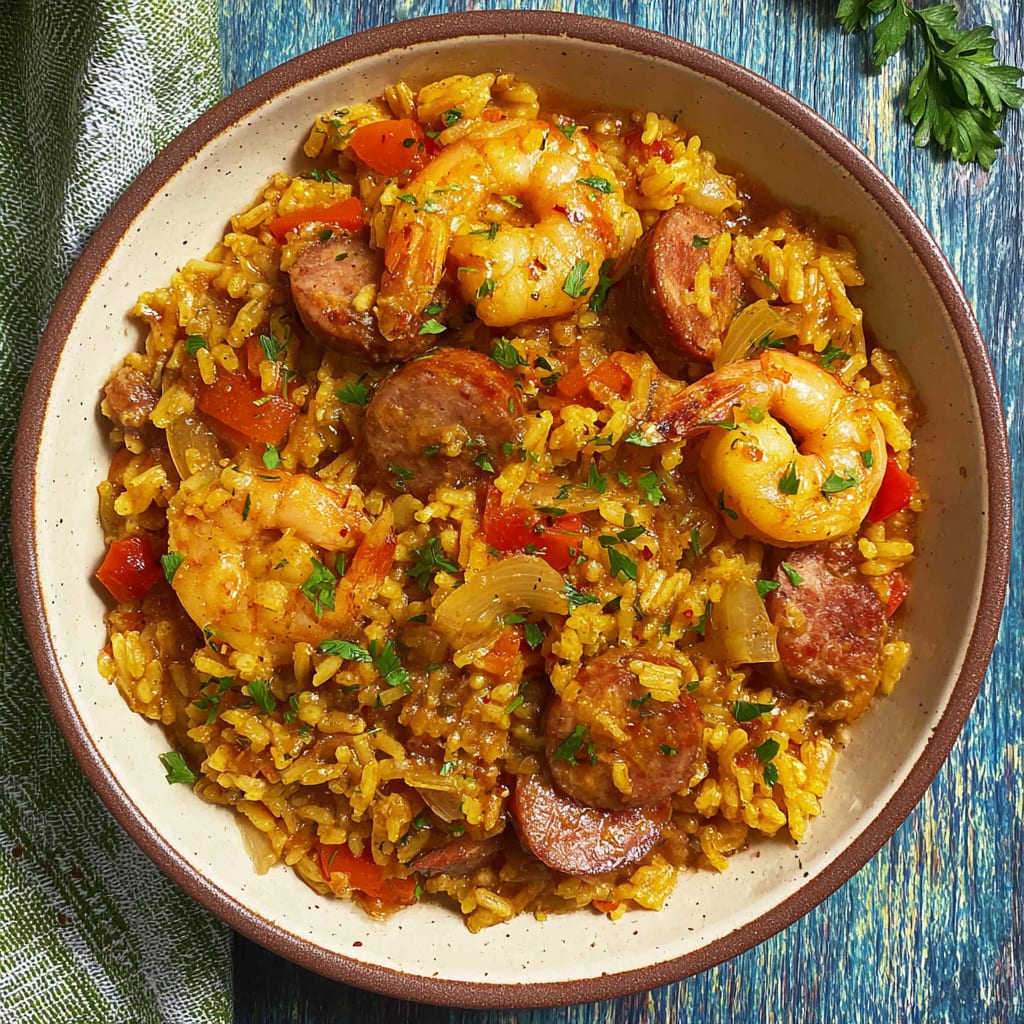
The rich aroma of spices and smoky sausage fills your kitchen as this hearty Jambalaya Recipe simmers on your stovetop. This classic Louisiana dish combines Creole and Cajun influences to create a perfect harmony of rice, meat, and vegetables in one satisfying pot. Jambalaya holds a special place in Southern cuisine, offering complex flavors despite its humble origins as a practical way to feed many with whatever ingredients were available. You’ll learn how to build layers of flavor with the perfect trinity of vegetables, select the right proteins, and achieve that ideal rice texture that makes an authentic Jambalaya Recipe so memorable.
Why You’ll Love This Recipe
This Jambalaya Recipe delivers an explosion of flavors that will transport you straight to New Orleans without leaving your kitchen. The combination of tender chicken, smoky andouille sausage, and succulent shrimp creates delightful texture contrasts in every bite. What makes this dish truly special is how the rice absorbs all the rich flavors from the broth, spices, and proteins.
You’ll appreciate how this one-pot meal comes together with minimal cleanup, making it perfect for both weeknight dinners and weekend gatherings. The recipe is wonderfully versatile, allowing you to adjust the spice level to suit your preference while maintaining that authentic Creole character. Each spoonful offers a different experience—sometimes you’ll get the kick from the cayenne, other times the earthiness of thyme, or the sweetness from the bell peppers.
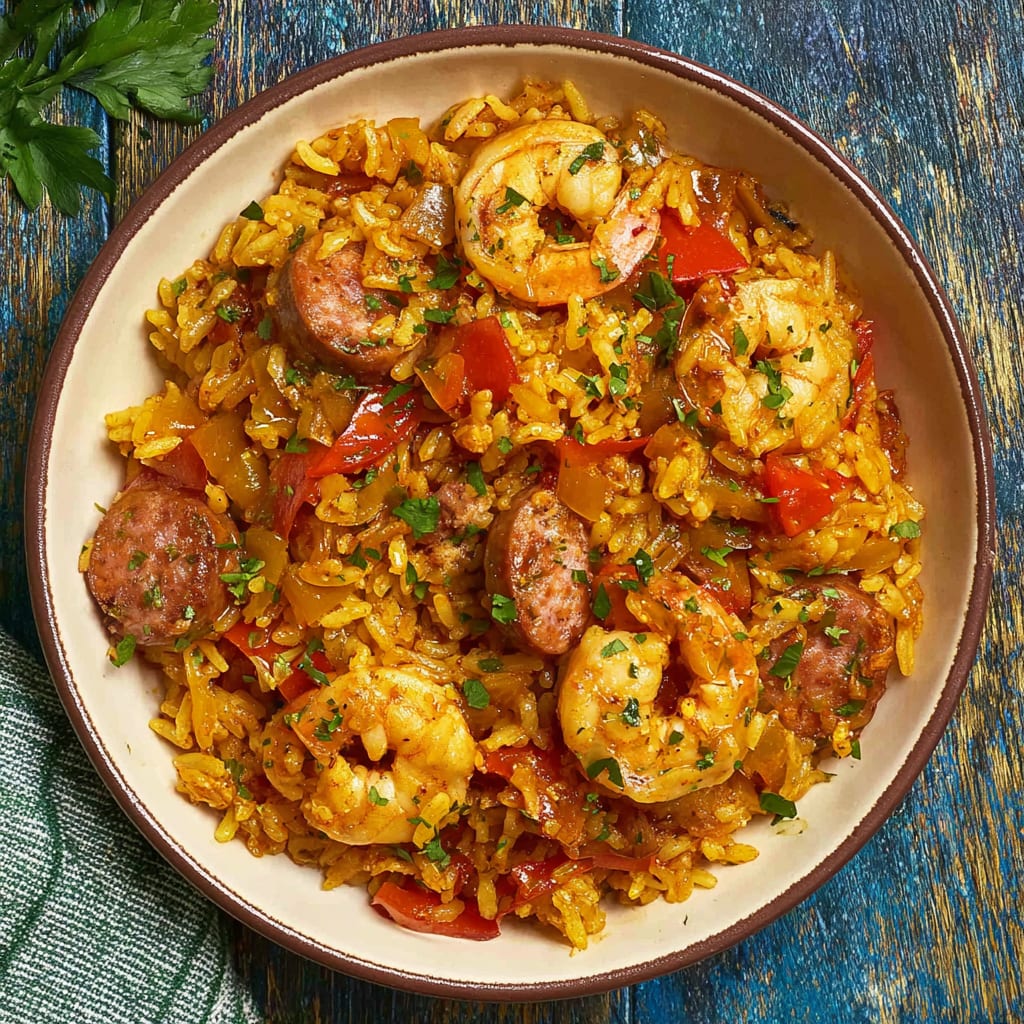
The visual appeal is undeniable too—the vibrant red tomatoes, green peppers, and white rice studded with protein create a dish that’s as beautiful as it is delicious. This Jambalaya isn’t just food; it’s a celebration in a pot.
Ingredients
For this authentic Jambalaya Recipe, you’ll need:
- 1 pound (450g) boneless chicken thighs, cut into 1-inch pieces
- 8 ounces (225g) andouille sausage, sliced into rounds
- 1/2 pound (225g) medium shrimp, peeled and deveined
- 2 tablespoons (30ml) vegetable oil
- 1 large onion (about 1 cup/160g), diced
- 1 green bell pepper (about 1 cup/150g), diced
- 2 celery ribs (about 1/2 cup/50g), diced
- 4 garlic cloves, minced
- 1 can (14.5 oz/411g) diced tomatoes
- 2 cups (400g) long-grain white rice
- 4 cups (950ml) chicken broth
- 2 tablespoons (30g) Cajun or Creole seasoning
- 2 bay leaves
- 1 teaspoon dried thyme
- 1/2 teaspoon cayenne pepper (adjust to taste)
- Salt and freshly ground black pepper
- 1/4 cup (15g) fresh parsley, chopped
- 4 green onions, sliced
The holy trinity of Cajun cooking—onion, bell pepper, and celery—forms the aromatic base, while andouille sausage provides that distinctive smoky flavor essential to authentic Creole Jambalaya.
Pro Tips
Select the Right Rice: For authentic Jambalaya, use long-grain white rice like Carolina or Jasmine. These varieties maintain their structure during cooking, absorbing flavors without becoming mushy. Avoid instant or short-grain rice, as they’ll break down and create a texture closer to risotto than traditional jambalaya.
Build Layers of Flavor: The secret to depth in this Jambalaya Recipe is proper layering. Start by browning your proteins to create a flavorful fond on the bottom of the pot. This caramelization becomes the foundation for your dish. Remove the meat before sautéing your trinity of vegetables in the same pot, scraping up those browned bits to incorporate them into your base.
Master the Liquid Ratio: The perfect rice-to-liquid ratio is crucial. Use 2 cups of rice to 4 cups of liquid for the ideal consistency. Once you’ve added your liquid, resist the urge to stir the pot repeatedly—this breaks down the rice and releases too much starch. Instead, give it one good stir when adding the rice, then cover and let the steam do its work. Only lift the lid to check if absolutely necessary.
Instructions
Step 1: Heat 2 tablespoons of vegetable oil in a large Dutch oven or heavy-bottomed pot over medium-high heat. Season chicken pieces with salt, pepper, and 1 teaspoon of Cajun seasoning. Add to the hot oil and cook until browned on all sides, about 5-6 minutes. The chicken doesn’t need to be fully cooked at this stage. Transfer to a plate and set aside.
Step 2: In the same pot, add the sliced andouille sausage and cook until browned, about 3-4 minutes. The sausage will release its oils and flavor the pot. Remove and add to the plate with the chicken.
Step 3: Reduce heat to medium and add the holy trinity—onions, bell peppers, and celery—to the pot. Cook in the flavored oil until vegetables begin to soften, about 5 minutes. The vegetables will pick up the browned bits from the bottom of the pot, incorporating all those flavors.
Step 4: Add minced garlic and cook for another 30 seconds until fragrant. Stir in the remaining Cajun seasoning, dried thyme, and cayenne pepper, coating the vegetables evenly with the spices.
Step 5: Pour in the diced tomatoes with their juice, stirring to combine. Allow to cook for 2-3 minutes until slightly reduced and the tomatoes begin to break down.
Step 6: Return the chicken and sausage to the pot, along with any accumulated juices. Add the bay leaves and stir to combine all ingredients.
Step 7: Add the uncooked rice to the pot, stirring to coat the grains with the flavorful mixture. This step is crucial for developing the signature taste of Jambalaya as the rice absorbs all the complex flavors.
Step 8: Pour in the chicken broth and bring the mixture to a boil. Once boiling, reduce heat to low, cover with a tight-fitting lid, and simmer for 20-25 minutes until rice is tender and has absorbed most of the liquid.
Step 9: When the rice is almost done (about 5 minutes before finishing), gently stir in the raw shrimp, pushing them slightly into the rice mixture. Cover and continue cooking until the shrimp turn pink and opaque, approximately 5 minutes.
Step 10: Remove the pot from heat. Discard bay leaves, then let the Jambalaya rest, covered, for 10 minutes. This resting period allows the flavors to meld and excess moisture to be absorbed. Fluff with a fork, garnish with fresh parsley and sliced green onions before serving.
Variations
Vegetarian Jambalaya: Transform this Jambalaya Recipe into a plant-based delight by omitting all meat and seafood. Double the vegetables and add 1 cup of sliced mushrooms for umami depth. Include 1 cup of red beans or black-eyed peas for protein, and use vegetable broth instead of chicken broth. The key is maintaining the authentic spice profile while creating a satisfying texture with hearty vegetables and legumes.
Seafood Jambalaya: For seafood lovers, create a maritime version of this Jambalaya by replacing the chicken with an additional 1/2 pound of shrimp plus 1/2 pound of fresh crabmeat and 6 ounces of chopped fresh oysters. Use seafood stock instead of chicken broth for an intensified ocean flavor. Add the seafood in stages based on cooking time—crabmeat first, then shrimp, and oysters last as they need minimal cooking.
Spicy Jambalaya: Elevate the heat in your Jambalaya Recipe by adding 2 finely chopped jalapeños with the trinity vegetables, increasing cayenne to 1 teaspoon, and incorporating 1 tablespoon of hot sauce. For true heat-seekers, add 1/4 teaspoon of ghost pepper powder or a dash of Louisiana-style hot sauce to individual portions upon serving.
Storage and Serving
Jambalaya stores beautifully, with flavors that actually improve over time. Allow leftovers to cool completely before transferring to airtight containers. Refrigerate for up to 3 days, ensuring quick cooling to prevent bacterial growth. For longer storage, freeze portions in freezer-safe containers for up to 2 months. When reheating, add a splash of broth or water to maintain moisture, as the rice continues absorbing liquid during storage.
Serve this Jambalaya Recipe in wide, shallow bowls to showcase its colorful components. For an authentic Louisiana experience, accompany with crusty French bread for sopping up the flavorful sauce and a simple side salad with vinaigrette dressing to cut through the richness. A cold bottle of Abita beer or sweet tea makes the perfect beverage pairing.
For an impressive dinner party presentation, serve straight from the cooking pot at the table, garnished with additional fresh herbs. Offer hot sauce on the side for guests who enjoy extra heat. This Jambalaya makes a spectacular centerpiece for Mardi Gras celebrations or weekend gatherings when paired with simple appetizers like deviled eggs or cheese straws.
FAQs
Can I make Jambalaya in advance?
Yes, Jambalaya often tastes better the next day as the flavors have time to meld. Prepare the recipe through Step 8, undercooking the rice slightly. Cool completely, refrigerate, and when ready to serve, reheat gently with a splash of broth, then add the shrimp to finish cooking.
Is Jambalaya supposed to be wet or dry?
Authentic Jambalaya Recipe yields a consistency that’s moist but not soupy. The rice should be tender and distinct, not clumped together or swimming in liquid. If your jambalaya seems too wet, cook uncovered for a few extra minutes to evaporate excess moisture.
Can I use brown rice instead of white rice?
You can substitute brown rice in this Jambalaya Recipe, but you’ll need to increase cooking time by about 15-20 minutes and add an extra 1/2 cup of broth. The texture will be slightly chewier and nuttier than traditional jambalaya.
What’s the difference between Jambalaya and Gumbo?
While both are Louisiana classics, Jambalaya is a rice-based dish where all ingredients cook together, while gumbo is a stew served over separately cooked rice. Gumbo also relies on a roux base and typically includes okra or filé powder as thickeners.
How spicy is traditional Jambalaya?
Authentic Jambalaya has a moderate heat level that showcases the complex spice blend rather than overwhelming heat. This recipe allows you to adjust the cayenne pepper to your preference—start with less if you’re sensitive to heat, as you can always add more to individual portions.
Jambalaya Recipe
- Prep Time: 20 minutes
- Cook Time: 45 minutes
- Total Time: 1 hour 5 minutes
- Yield: 6 servings 1x
- Category: Dinner
- Method: Simmering
- Cuisine: Americaine
Description
Jambalaya Recipe featuring spicy sausage, tender chicken, and flavorful Cajun seasonings – a quick, crowd-pleasing dish with Southern charm.
Ingredients
- 1 pound (450g) boneless chicken thighs, cut into 1-inch pieces
- 8 ounces (225g) andouille sausage, sliced into rounds
- 1/2 pound (225g) medium shrimp, peeled and deveined
- 2 tablespoons (30ml) vegetable oil
- 1 large onion (about 1 cup/160g), diced
- 1 green bell pepper (about 1 cup/150g), diced
- 2 celery ribs (about 1/2 cup/50g), diced
- 4 garlic cloves, minced
- 1 can (14.5 oz/411g) diced tomatoes
- 2 cups (400g) long-grain white rice
- 4 cups (950ml) chicken broth
- 2 tablespoons (30g) Cajun or Creole seasoning
- 2 bay leaves
- 1 teaspoon dried thyme
- 1/2 teaspoon cayenne pepper (adjust to taste)
- Salt and freshly ground black pepper
- 1/4 cup (15g) fresh parsley, chopped
- 4 green onions, sliced
Instructions
- Step 1: Heat 2 tablespoons of vegetable oil in a large Dutch oven or heavy-bottomed pot over medium-high heat. Season chicken pieces with salt, pepper, and 1 teaspoon of Cajun seasoning. Add to the hot oil and cook until browned on all sides, about 5-6 minutes. The chicken doesn’t need to be fully cooked at this stage. Transfer to a plate and set aside.
- Step 2: In the same pot, add the sliced andouille sausage and cook until browned, about 3-4 minutes. The sausage will release its oils and flavor the pot. Remove and add to the plate with the chicken.
- Step 3: Reduce heat to medium and add the holy trinity—onions, bell peppers, and celery—to the pot. Cook in the flavored oil until vegetables begin to soften, about 5 minutes. The vegetables will pick up the browned bits from the bottom of the pot, incorporating all those flavors.
- Step 4: Add minced garlic and cook for another 30 seconds until fragrant. Stir in the remaining Cajun seasoning, dried thyme, and cayenne pepper, coating the vegetables evenly with the spices.
- Step 5: Pour in the diced tomatoes with their juice, stirring to combine. Allow to cook for 2-3 minutes until slightly reduced and the tomatoes begin to break down.
- Step 6: Return the chicken and sausage to the pot, along with any accumulated juices. Add the bay leaves and stir to combine all ingredients.
- Step 7: Add the uncooked rice to the pot, stirring to coat the grains with the flavorful mixture. This step is crucial for developing the signature taste of Jambalaya as the rice absorbs all the complex flavors.
- Step 8: Pour in the chicken broth and bring the mixture to a boil. Once boiling, reduce heat to low, cover with a tight-fitting lid, and simmer for 20-25 minutes until rice is tender and has absorbed most of the liquid.
- Step 9: When the rice is almost done (about 5 minutes before finishing), gently stir in the raw shrimp, pushing them slightly into the rice mixture. Cover and continue cooking until the shrimp turn pink and opaque, approximately 5 minutes.
- Step 10: Remove the pot from heat. Discard bay leaves, then let the Jambalaya rest, covered, for 10 minutes. This resting period allows the flavors to meld and excess moisture to be absorbed. Fluff with a fork, garnish with fresh parsley and sliced green onions before serving.
Notes
Fresh ingredients will always yield the best flavor results.
Nutrition
- Serving Size: 1.5 cups
- Calories: 550 calories per serving
- Sugar: 4 grams
- Sodium: 1200 mg
- Fat: 25 grams
- Saturated Fat: 7 grams
- Unsaturated Fat: 18 grams
- Trans Fat: 0 grams
- Carbohydrates: 45 grams
- Fiber: 2 grams
- Protein: 30 grams
- Cholesterol: 145 mg