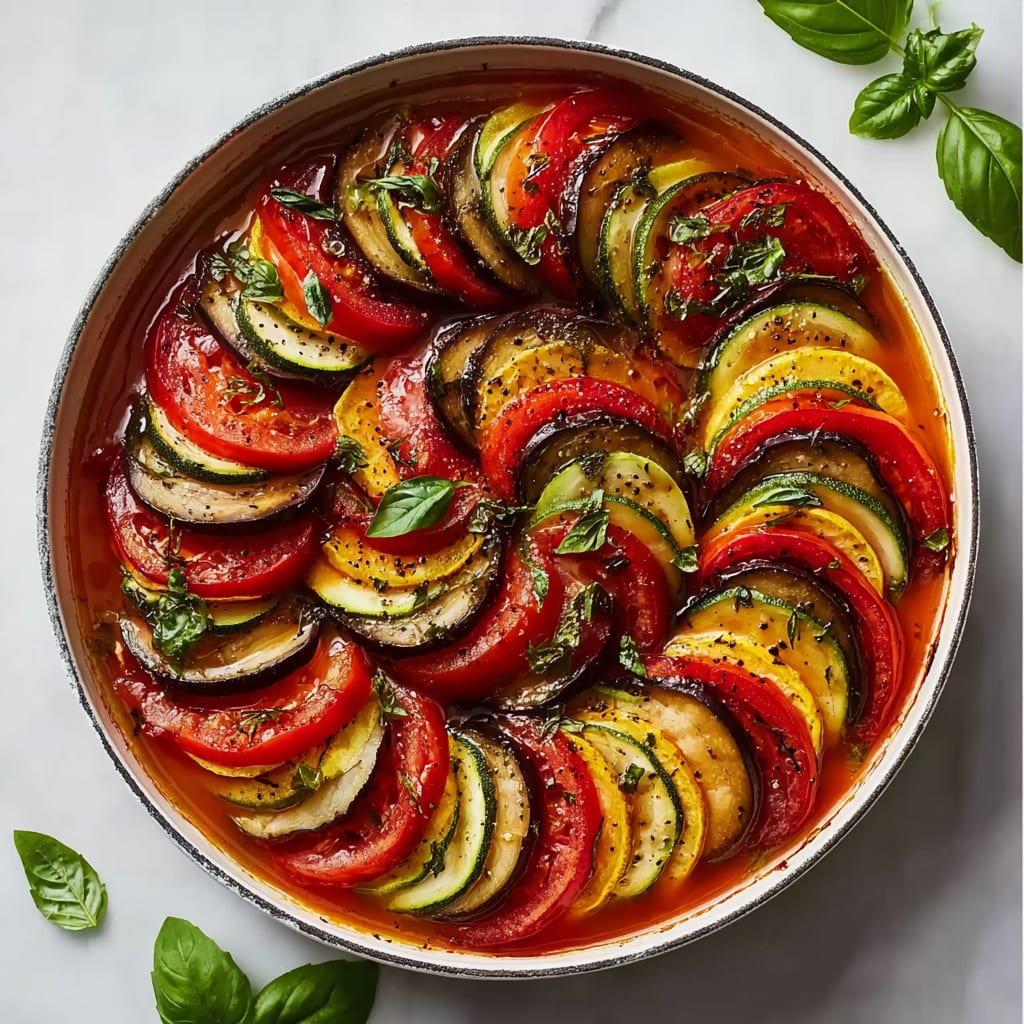

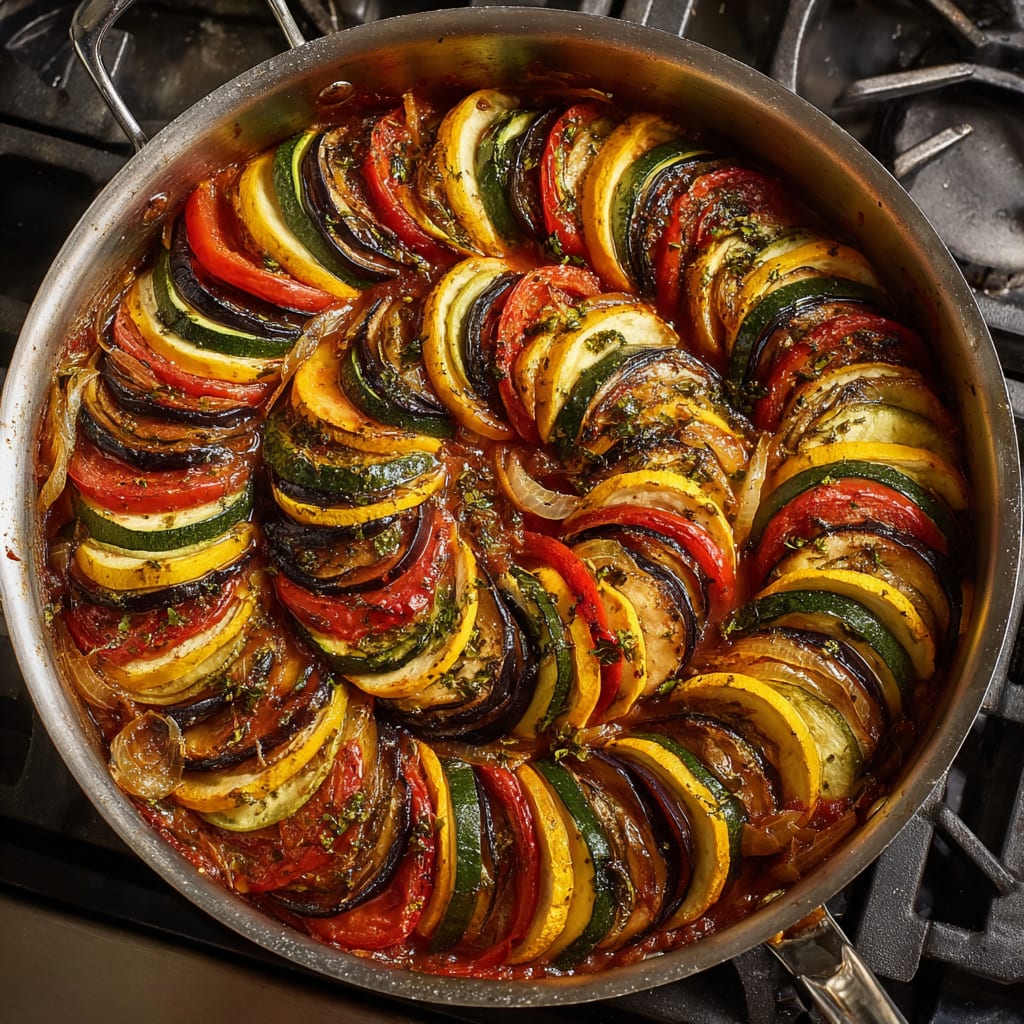
The rich, aromatic medley of summer vegetables gently simmering in olive oil and fragrant herbs creates a symphony of flavors in this classic Homemade Ratatouille. This beloved Provençal dish transforms humble garden vegetables into a colorful celebration of Mediterranean cuisine. Whether served as a hearty main course or versatile side dish, ratatouille offers both rustic charm and sophisticated flavor profiles that have made it a timeless favorite. You’ll learn how to layer flavors properly, bring out the natural sweetness of each vegetable, and create a stunning presentation that honors this traditional French countryside recipe.
Why You’ll Love This Recipe
This Homemade Ratatouille stands out as both a feast for the eyes and the palate. Unlike many versions that turn vegetables to mush, this recipe maintains the distinct integrity of each ingredient, creating a delightful textural contrast between the tender eggplant, sweet bell peppers, and juicy zucchini. The slow-cooking method allows the vegetables to release their natural flavors while absorbing the aromatic herbs and rich olive oil.
What makes this ratatouille truly special is its versatility. Enjoy it hot as a main course, at room temperature as an appetizer, or cold in a sandwich the next day. Each serving offers a slightly different experience as the flavors continue to develop over time.
Even better, this dish celebrates seasonal produce at its peak, making it both economical and environmentally friendly. The simple preparation relies on quality ingredients rather than complicated techniques, making this ratatouille recipe accessible even for novice cooks while still impressing the most discerning guests.
Ingredients
For this classic Homemade Ratatouille (serves 6):
- 1 large eggplant (about 1.5 lbs/680g), cut into 1-inch cubes
- 2 medium zucchini (about 1 lb/450g), sliced into ¼-inch rounds
- 2 medium yellow squash (about 1 lb/450g), sliced into ¼-inch rounds
- 2 red bell peppers, seeded and cut into 1-inch pieces
- 1 large onion, diced (about 2 cups/300g)
- 4 large garlic cloves, minced (about 2 tablespoons)
- 1 can (28 oz/800g) crushed tomatoes (or 6-7 fresh tomatoes, diced)
- 3 tablespoons extra virgin olive oil, plus extra for serving
- 2 bay leaves
- 3 sprigs fresh thyme (or 1 teaspoon dried)
- 2 tablespoons fresh basil, chopped, plus more for garnish
- 1 tablespoon fresh parsley, chopped
- 1 teaspoon salt, or to taste
- ½ teaspoon freshly ground black pepper
- Pinch of red pepper flakes (optional)
Pro Tips
The secret to exceptional ratatouille lies in respecting each vegetable’s unique cooking properties. Rather than throwing everything in at once, cook ingredients in stages. Start by sautéing the onions until translucent before adding garlic, then introduce vegetables based on density—eggplant and bell peppers first, followed by zucchini and squash later. This prevents overcooking delicate vegetables while ensuring denser ones are perfectly tender.
Salt your eggplant 30 minutes before cooking, then pat dry. This crucial step draws out bitterness and excess moisture, allowing the eggplant to better absorb flavors and achieve that coveted silky texture without becoming soggy. The difference is remarkable in the final dish.
Finally, resist the urge to constantly stir. Once your ratatouille is simmering, limit stirring to just occasional gentle folding. This preserves the integrity of each vegetable, preventing them from breaking down too much. The goal is a cohesive dish where distinct vegetables harmonize while maintaining their individual character—not vegetable stew.
Instructions
Step 1: Prepare the Eggplant
Place cubed eggplant in a colander, sprinkle with ½ teaspoon salt, and toss to coat evenly. Let sit for 30 minutes to draw out moisture and bitterness. After 30 minutes, gently pat dry with paper towels to remove excess moisture and salt. This step ensures your eggplant will be silky, not soggy, in your finished ratatouille.
Step 2: Sauté the Aromatics
Heat 2 tablespoons olive oil in a large, heavy-bottomed Dutch oven over medium heat. Add onions and cook until translucent and slightly golden, about 5-7 minutes. Add minced garlic and cook for another 30 seconds until fragrant, being careful not to burn it. The aroma that fills your kitchen now is the foundation of your ratatouille’s flavor profile.
Step 3: Layer in the Vegetables
Add eggplant and bell peppers to the pot with an additional tablespoon of olive oil. Cook for about 8 minutes, stirring occasionally, until they begin to soften. Next, add zucchini and yellow squash, cooking for another 5 minutes until all vegetables are beginning to tenderize but still hold their shape.
Step 4: Add Tomatoes and Seasonings
Pour in crushed tomatoes, then add bay leaves, thyme, half the chopped basil, salt, pepper, and red pepper flakes if using. Gently stir to combine all ingredients. The vibrant colors now mingling in your pot showcase why ratatouille is as beautiful as it is delicious.
Step 5: Simmer to Perfection
Reduce heat to low, cover partially with a lid, and let simmer for 30-40 minutes, stirring gently and occasionally. The ratatouille is ready when the vegetables are tender but not mushy, and the liquid has reduced to create a thick, flavorful sauce. Remove bay leaves and thyme sprigs.
Step 6: Final Touches
Remove from heat and stir in remaining fresh basil and parsley. Let the ratatouille rest for 10 minutes before serving to allow flavors to settle. This resting period is where the magic happens, as all the individual components meld into a harmonious dish.
Variations
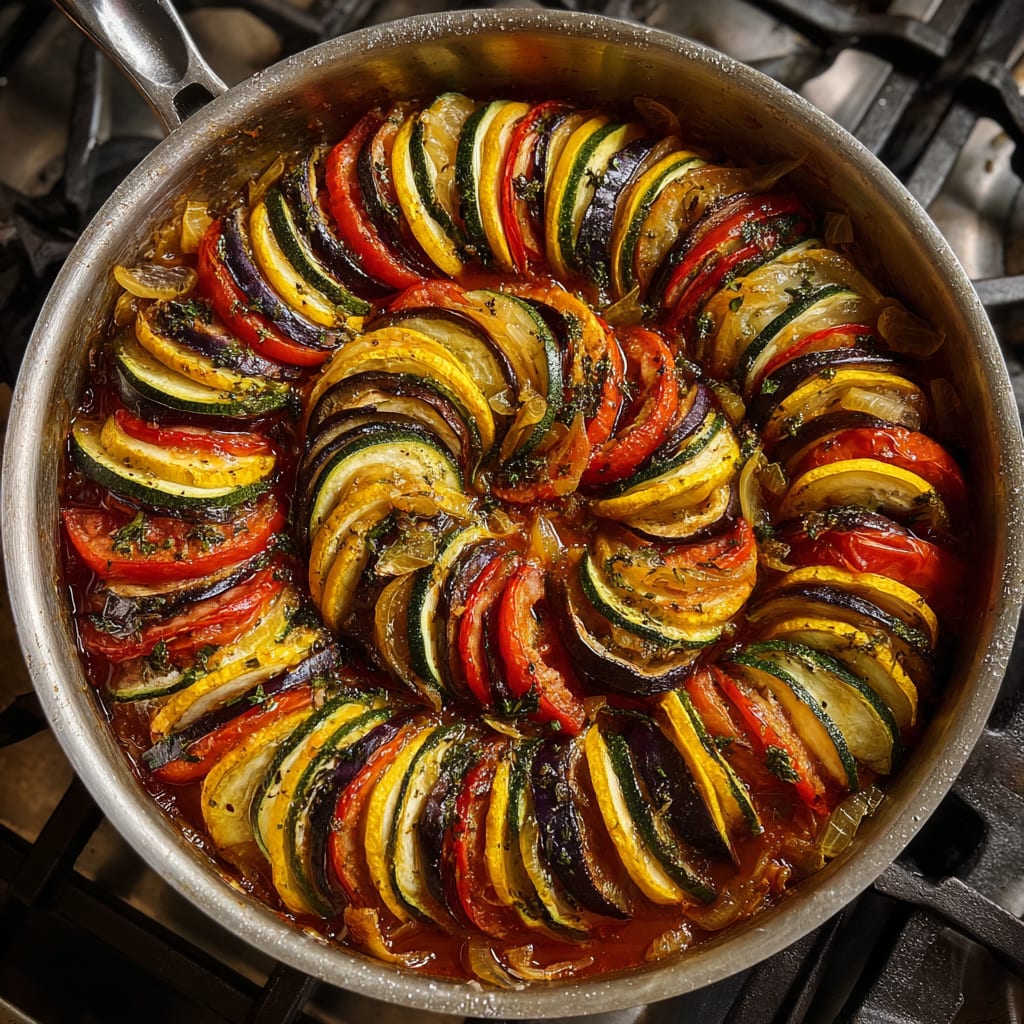
Traditional Layered Presentation: For a more elegant presentation inspired by the famous movie, slice vegetables thinly and arrange in alternating, overlapping rows in a circular baking dish. Spoon tomato sauce on the bottom, arrange vegetables on top, brush with olive oil, and cover with parchment. Bake at 375°F (190°C) for 45 minutes until tender. This variation transforms ratatouille into a stunning centerpiece while maintaining its authentic flavors.
Mediterranean Ratatouille: Add a Mediterranean twist by incorporating 1 cup of chickpeas, ¼ cup pitted kalamata olives, and 2 tablespoons capers to the traditional recipe. Finish with crumbled feta cheese and a drizzle of balsamic glaze. This protein-rich variation turns your vegetable ratatouille into a complete one-pot meal with distinctive Mediterranean flair.
Spicy North African Version: Introduce North African flavors by adding 1 teaspoon each of ground cumin, coriander, and harissa paste during the cooking process. Garnish with fresh cilantro and a dollop of cooling yogurt. This warming variation highlights the ratatouille’s adaptability across different culinary traditions while maintaining its vegetable-forward essence.
Storage and Serving
Homemade Ratatouille actually improves with time as the flavors continue to meld. Store leftovers in an airtight container in the refrigerator for up to 5 days. For longer storage, freeze portions in freezer-safe containers for up to 3 months. Thaw overnight in the refrigerator before reheating gently on the stovetop with a splash of water if needed.
Serve your ratatouille warm as a main dish with crusty bread for soaking up the flavorful juices. For an elegant presentation, top with a poached egg and fresh herbs, allowing the runny yolk to create a luxurious sauce when mixed with the vegetables. Alternatively, use it as a vibrant side dish alongside grilled fish or roasted chicken.
For a delightful brunch option, spoon room-temperature ratatouille onto toasted sourdough bread rubbed with garlic and drizzled with olive oil. The contrast between the crispy bread and tender vegetables creates a satisfying texture experience that showcases this versatile dish’s adaptability.
FAQs
Can I make ratatouille ahead of time?
Absolutely! Ratatouille actually tastes better the next day after flavors have had time to develop. Make it up to 2 days in advance, refrigerate, and gently reheat before serving, or enjoy at room temperature.
Why is my ratatouille watery?
Excess moisture usually comes from not salting the eggplant or using overly ripe vegetables. Make sure to salt and drain your eggplant before cooking, and if using fresh tomatoes, remove some seeds. If still too watery, simmer uncovered for 10-15 extra minutes to reduce the liquid.
Can I use different vegetables in ratatouille?
While traditional ratatouille contains specific vegetables, you can adapt based on seasonal availability. Maintain the tomato base but feel free to substitute yellow squash with pattypan squash or add vegetables like fennel for a different flavor profile.
Is ratatouille served hot or cold?
Ratatouille is versatile and can be served hot, at room temperature, or cold. Hot ratatouille makes a comforting main dish, room temperature works perfectly as a side, and cold ratatouille makes a delicious sandwich filling or salad topping.
How can I make my ratatouille more flavorful?
For deeper flavor, roast the bell peppers, eggplant, and zucchini before adding them to the pot. Additionally, incorporating a splash of balsamic vinegar or a parmesan rind during simmering will add complexity to your homemade ratatouille.
Homemade Ratatouille Recipe
- Prep Time: 15 mins
- Cook Time: 30 mins
- Total Time: 45 mins
- Yield: 4 servings 1x
- Category: Dinner
- Method: Cooking
- Cuisine: Americaine
Description
Looking for a delicious dinner idea? Try our Homemade Ratatouille Recipe today! Discover a savory, vegetable-packed dish bursting with flavor.
Ingredients
- 1 large eggplant (about 1.5 lbs/680g), cut into 1-inch cubes
- 2 medium zucchini (about 1 lb/450g), sliced into ¼-inch rounds
- 2 medium yellow squash (about 1 lb/450g), sliced into ¼-inch rounds
- 2 red bell peppers, seeded and cut into 1-inch pieces
- 1 large onion, diced (about 2 cups/300g)
- 4 large garlic cloves, minced (about 2 tablespoons)
- 1 can (28 oz/800g) crushed tomatoes (or 6–7 fresh tomatoes, diced)
- 3 tablespoons extra virgin olive oil, plus extra for serving
- 2 bay leaves
- 3 sprigs fresh thyme (or 1 teaspoon dried)
- 2 tablespoons fresh basil, chopped, plus more for garnish
- 1 tablespoon fresh parsley, chopped
- 1 teaspoon salt, or to taste
- ½ teaspoon freshly ground black pepper
- Pinch of red pepper flakes (optional)
Instructions
- Step 1: Prepare the Eggplant Place cubed eggplant in a colander, sprinkle with ½ teaspoon salt, and toss to coat evenly. Let sit for 30 minutes to draw out moisture and bitterness. After 30 minutes, gently pat dry with paper towels to remove excess moisture and salt. This step ensures your eggplant will be silky, not soggy, in your finished ratatouille.
- Step 2: Sauté the Aromatics Heat 2 tablespoons olive oil in a large, heavy-bottomed Dutch oven over medium heat. Add onions and cook until translucent and slightly golden, about 5-7 minutes. Add minced garlic and cook for another 30 seconds until fragrant, being careful not to burn it. The aroma that fills your kitchen now is the foundation of your ratatouille’s flavor profile.
- Step 3: Layer in the Vegetables Add eggplant and bell peppers to the pot with an additional tablespoon of olive oil. Cook for about 8 minutes, stirring occasionally, until they begin to soften. Next, add zucchini and yellow squash, cooking for another 5 minutes until all vegetables are beginning to tenderize but still hold their shape.
- Step 4: Add Tomatoes and Seasonings Pour in crushed tomatoes, then add bay leaves, thyme, half the chopped basil, salt, pepper, and red pepper flakes if using. Gently stir to combine all ingredients. The vibrant colors now mingling in your pot showcase why ratatouille is as beautiful as it is delicious.
- Step 5: Simmer to Perfection Reduce heat to low, cover partially with a lid, and let simmer for 30-40 minutes, stirring gently and occasionally. The ratatouille is ready when the vegetables are tender but not mushy, and the liquid has reduced to create a thick, flavorful sauce. Remove bay leaves and thyme sprigs.
- Step 6: Final Touches Remove from heat and stir in remaining fresh basil and parsley. Let the ratatouille rest for 10 minutes before serving to allow flavors to settle. This resting period is where the magic happens, as all the individual components meld into a harmonious dish.
Notes
Fresh ingredients will always yield the best flavor results.
Nutrition
- Serving Size: 1 serving
- Calories: 300
- Sugar: 5g
- Sodium: 400mg
- Fat: 10g
- Saturated Fat: 3g
- Unsaturated Fat: 7g
- Trans Fat: 0g
- Carbohydrates: 40g
- Fiber: 5g
- Protein: 15g
- Cholesterol: 50mg