
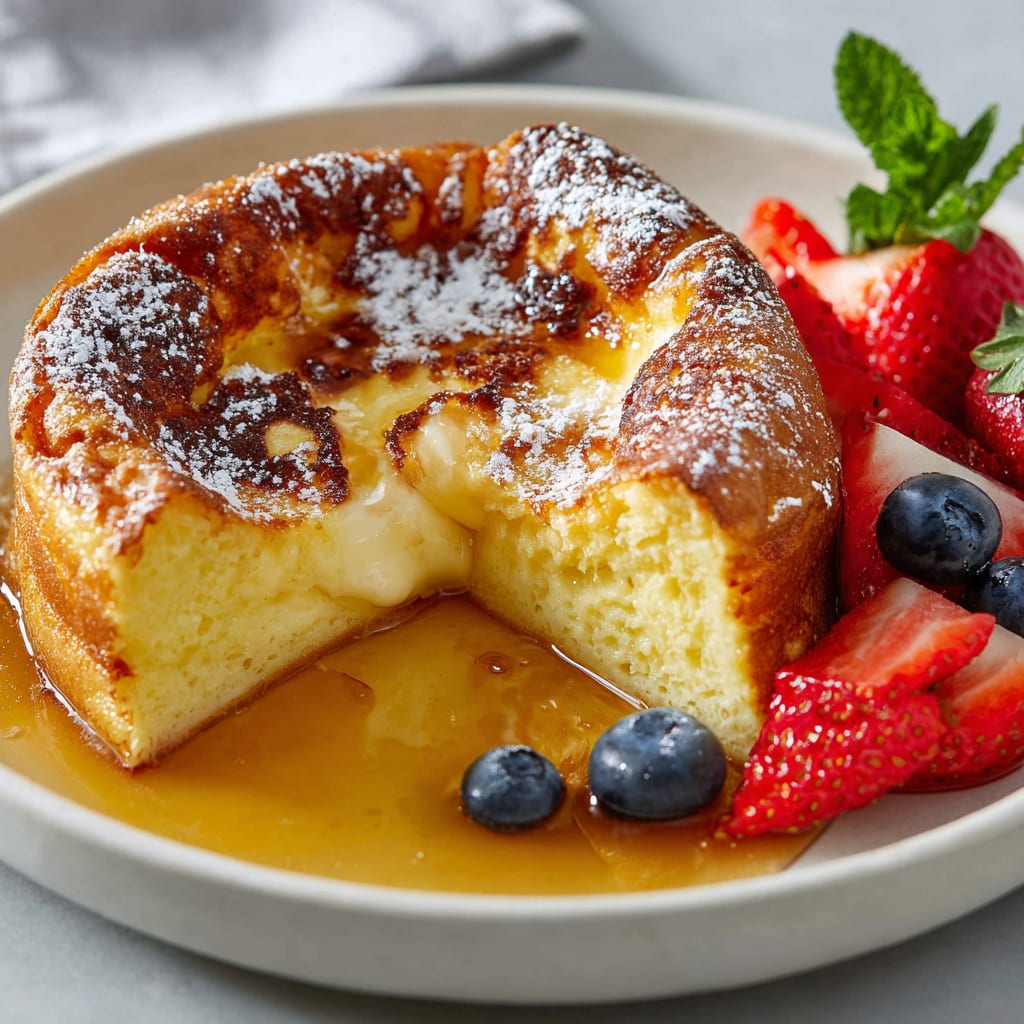
Imagine the satisfying puff of a German Pancake rising dramatically in your oven, its edges climbing high along the skillet while the center remains tender and custardy. This magical breakfast creation—also known as a Dutch baby—combines the comfort of traditional pancakes with the wow-factor of a soufflé. Unlike their flatter American cousins, German Pancakes bake into a golden, crater-like masterpiece that’s simultaneously crisp at the edges and soft in the middle. You’ll learn how to create this impressive yet surprisingly simple breakfast that requires minimal ingredients and effort but delivers maximum flavor and presentation points every time.
Why You’ll Love This Recipe
There’s something uniquely satisfying about watching a German Pancake transform in your oven. The simple batter mysteriously climbs the sides of your pan, creating a dramatic presentation that’s sure to impress anyone at your breakfast table.
The textural contrast is what makes this dish truly special. Each bite offers the delightful combination of crispy, browned edges giving way to a tender, slightly custardy center. It’s like enjoying a pancake, popover, and crepe all at once.
Beyond the sensory delight, you’ll appreciate how incredibly simple German Pancakes are to prepare. Unlike traditional pancakes that require standing over a stove flipping batch after batch, this entire dish bakes in one pan. Just whisk the ingredients, pour into a hot skillet, and let your oven do the work while you prepare your morning coffee.
Best of all, this recipe offers tremendous versatility. Whether topped with classic lemon and powdered sugar or piled high with fresh berries and whipped cream, your German Pancake provides the perfect canvas for whatever flavors you’re craving.
Ingredients
For this classic German Pancake recipe, you’ll need:
- 3 large eggs, room temperature
- ½ cup all-purpose flour (60g)
- ½ cup whole milk (120ml)
- 1 tablespoon granulated sugar
- ¼ teaspoon salt
- ½ teaspoon pure vanilla extract
- 2 tablespoons unsalted butter (28g)
For serving (optional):
- Fresh lemon wedges
- Powdered sugar
- Maple syrup
- Fresh berries
- Whipped cream
The key to perfect Dutch baby pancakes lies in the quality of your ingredients. Room temperature eggs create more volume, while whole milk provides richness. The touch of vanilla enhances the flavor profile without overwhelming the delicate egg base. Using a hot cast iron skillet creates that signature puffed edge that makes German Pancakes so visually impressive.
Pro Tips
Preheat Everything: The dramatic rise of a German Pancake depends on temperature shock. Always preheat your oven to 425°F (220°C) for at least 20 minutes before baking. More importantly, place your cast iron skillet or baking dish in the oven during this preheating period. When you pour the batter into a properly heated pan with melted butter, you’ll achieve that signature rise and crispy edge that defines a perfect Dutch baby.
Don’t Overmix: For the most tender pancake, mix your batter just until the ingredients are combined. Overmixing develops gluten, resulting in a tougher, less puffy pancake. I recommend using a blender for 10 seconds or whisking by hand until no large lumps remain. Then let the batter rest for 5 minutes before pouring it into your hot pan – this allows any gluten that has developed to relax.
Keep the Oven Door Closed: Resist the temptation to peek! Opening the oven during baking releases heat and can cause your beautifully rising German Pancake to collapse prematurely. Trust the process and wait until the baking time is complete. You’ll know it’s done when the edges are deeply golden and dramatically puffed while the center is set but still slightly custardy.
Instructions
Step 1: Prepare Your Batter
In a blender or large bowl, combine the eggs, milk, flour, sugar, salt, and vanilla extract. Blend or whisk until the mixture is just combined and smooth, about 10-15 seconds in a blender or 30 seconds by hand. The batter will be very thin, similar to crepe batter – this is exactly what you want! Let the batter rest while your pan heats up.
Step 2: Heat Your Pan
Place a 10-inch cast iron skillet or oven-safe dish in your oven and preheat to 425°F (220°C). Allow both the oven and pan to heat fully for at least 10 minutes. This step is crucial for achieving that dramatic puff that makes German Pancakes so special.
Step 3: Add Butter and Batter
Carefully remove the hot skillet from the oven (remember, the handle will be extremely hot). Add the butter and swirl it around as it melts, ensuring it coats the sides of the pan. Immediately pour the pancake batter into the center of the hot buttered skillet. The batter may start to sizzle at the edges – that’s perfect!
Step 4: Bake
Quickly return the skillet to the oven and bake for 20-25 minutes until the pancake is puffed dramatically around the edges and golden brown. The center should be set but slightly custardy. You’ll notice it rising unevenly and creating beautiful ripples and waves – this distinctive appearance is part of the charm of authentic German Pancakes.
Step 5: Serve Immediately
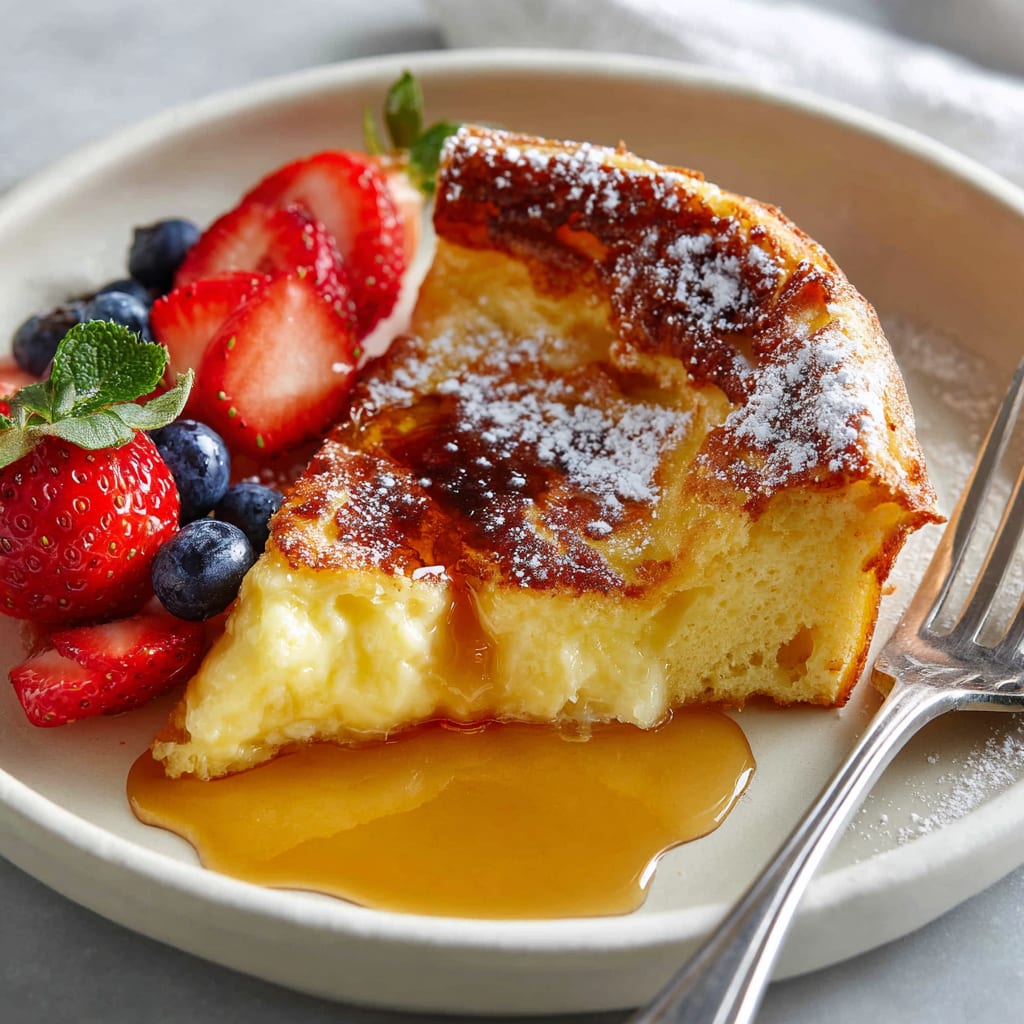
A German Pancake waits for no one! As soon as you remove it from the oven, it will begin to deflate slightly, so gather everyone to the table. Dust with powdered sugar, squeeze fresh lemon over the top, or add your favorite toppings. Slice into wedges and serve while still warm for the best texture and experience.
Variations
Berry Dutch Baby: Transform your basic German Pancake into a fruit-filled delight by adding 1 cup of fresh berries to the hot buttered pan just before pouring in the batter. Blueberries, raspberries, or sliced strawberries work beautifully, slightly caramelizing as they cook. This variation adds bursts of flavor and a gorgeous color contrast to the golden pancake. Finish with a dollop of lemon curd for a perfect sweet-tart balance.
Apple Cinnamon German Pancake: For a cozy autumn twist, sauté one thinly sliced apple with 2 tablespoons butter and 2 tablespoons brown sugar in your cast iron skillet until just tender. Sprinkle with ½ teaspoon cinnamon before pouring the pancake batter over the apples and baking as directed. The apples caramelize further during baking, creating a built-in topping reminiscent of an upside-down cake.
Savory Dutch Baby: Not all German Pancakes need to be sweet! Create a savory version by omitting the sugar and adding 2 tablespoons of chopped fresh herbs (thyme, chives, or rosemary) and ¼ cup of grated Parmesan to the batter. After baking, top with sautéed mushrooms, crumbled bacon, or smoked salmon for an elegant brunch option that pairs perfectly with a light salad.
Storage and Serving
German Pancakes are at their absolute best when served immediately after baking, while the edges are still crispy and the center maintains its delicate texture. However, if you have leftovers, allow them to cool completely before storing in an airtight container in the refrigerator for up to 2 days. Reheat in a 350°F (175°C) oven for 5 minutes to restore some crispness, though it won’t achieve the same dramatic puff as when freshly baked.
For a classic serving suggestion, dust your German Pancake with powdered sugar and squeeze fresh lemon juice over the top. This traditional combination highlights the pancake’s delicate egg flavor with bright acidity and just a touch of sweetness.
Create a decadent breakfast by topping your Dutch baby with fresh macerated berries and a dollop of lightly sweetened whipped cream or vanilla Greek yogurt. The contrast between the warm pancake and cool toppings creates a delightful temperature contrast.
For a comfort food approach, drizzle with warm maple syrup and scatter with sliced bananas and a sprinkle of cinnamon. The syrup pools in the pancake’s natural valleys, creating perfect bites of flavor in every forkful.
FAQs
Why didn’t my German Pancake puff up as expected?
The dramatic rise comes from proper heat. Ensure your oven and skillet are fully preheated, and use room temperature ingredients. Cold eggs or milk can prevent the proper rise. Also, check that your oven temperature is accurate using an oven thermometer.
Can I make German Pancake batter ahead of time?
While it’s best made fresh, you can prepare the batter up to one hour ahead and keep it at room temperature. Any longer may affect the rise. Never refrigerate the batter as cold batter hitting a hot pan won’t puff properly.
What’s the best pan to use for Dutch baby pancakes?
A well-seasoned 10-inch cast iron skillet is ideal. Its heat retention creates the perfect environment for the dramatic rise. However, any oven-safe skillet or pie plate will work, though glass dishes may require an extra minute of baking time.
Are German Pancakes really German?
Despite the name, German Pancakes as we know them in America are actually a Pennsylvania Dutch creation with German influences. They’re more similar to a popover or Yorkshire pudding than traditional German pancakes (which are more like crepes).
Can I make mini German Pancakes?
Absolutely! Divide the batter between muffin tins or small ramekins that have been preheated with a small amount of butter in each. Reduce baking time to 12-15 minutes for these individual-sized treats.

German Pancakes
- Prep Time: 15 mins
- Cook Time: 30 mins
- Total Time: 45 mins
- Yield: 4 servings 1x
- Category: Breakfast
- Method: Cooking
- Cuisine: Americaine
Description
Discover the secret to perfect German Pancakes with these foolproof tips and tricks. Try making them today!
Ingredients
- 3 large eggs, room temperature
- ½ cup all-purpose flour (60g)
- ½ cup whole milk (120ml)
- 1 tablespoon granulated sugar
- ¼ teaspoon salt
- ½ teaspoon pure vanilla extract
- 2 tablespoons unsalted butter (28g)
Instructions
- Step 1: Prepare Your Batter In a blender or large bowl, combine the eggs, milk, flour, sugar, salt, and vanilla extract. Blend or whisk until the mixture is just combined and smooth, about 10-15 seconds in a blender or 30 seconds by hand. The batter will be very thin, similar to crepe batter – this is exactly what you want! Let the batter rest while your pan heats up.
- Step 2: Heat Your Pan Place a 10-inch cast iron skillet or oven-safe dish in your oven and preheat to 425°F (220°C). Allow both the oven and pan to heat fully for at least 10 minutes. This step is crucial for achieving that dramatic puff that makes **German Pancakes** so special.
- Step 3: Add Butter and Batter Carefully remove the hot skillet from the oven (remember, the handle will be extremely hot). Add the butter and swirl it around as it melts, ensuring it coats the sides of the pan. Immediately pour the pancake batter into the center of the hot buttered skillet. The batter may start to sizzle at the edges – that’s perfect!
- Step 4: Bake Quickly return the skillet to the oven and bake for 20-25 minutes until the pancake is puffed dramatically around the edges and golden brown. The center should be set but slightly custardy. You’ll notice it rising unevenly and creating beautiful ripples and waves – this distinctive appearance is part of the charm of authentic **German Pancakes**.
- Step 5: Serve Immediately A **German Pancake** waits for no one! As soon as you remove it from the oven, it will begin to deflate slightly, so gather everyone to the table. Dust with powdered sugar, squeeze fresh lemon over the top, or add your favorite toppings. Slice into wedges and serve while still warm for the best texture and experience.
Notes
Fresh ingredients will always yield the best flavor results.
Nutrition
- Serving Size: 1 serving
- Calories: 300
- Sugar: 5g
- Sodium: 400mg
- Fat: 10g
- Saturated Fat: 3g
- Unsaturated Fat: 7g
- Trans Fat: 0g
- Carbohydrates: 40g
- Fiber: 5g
- Protein: 15g
- Cholesterol: 50mg