
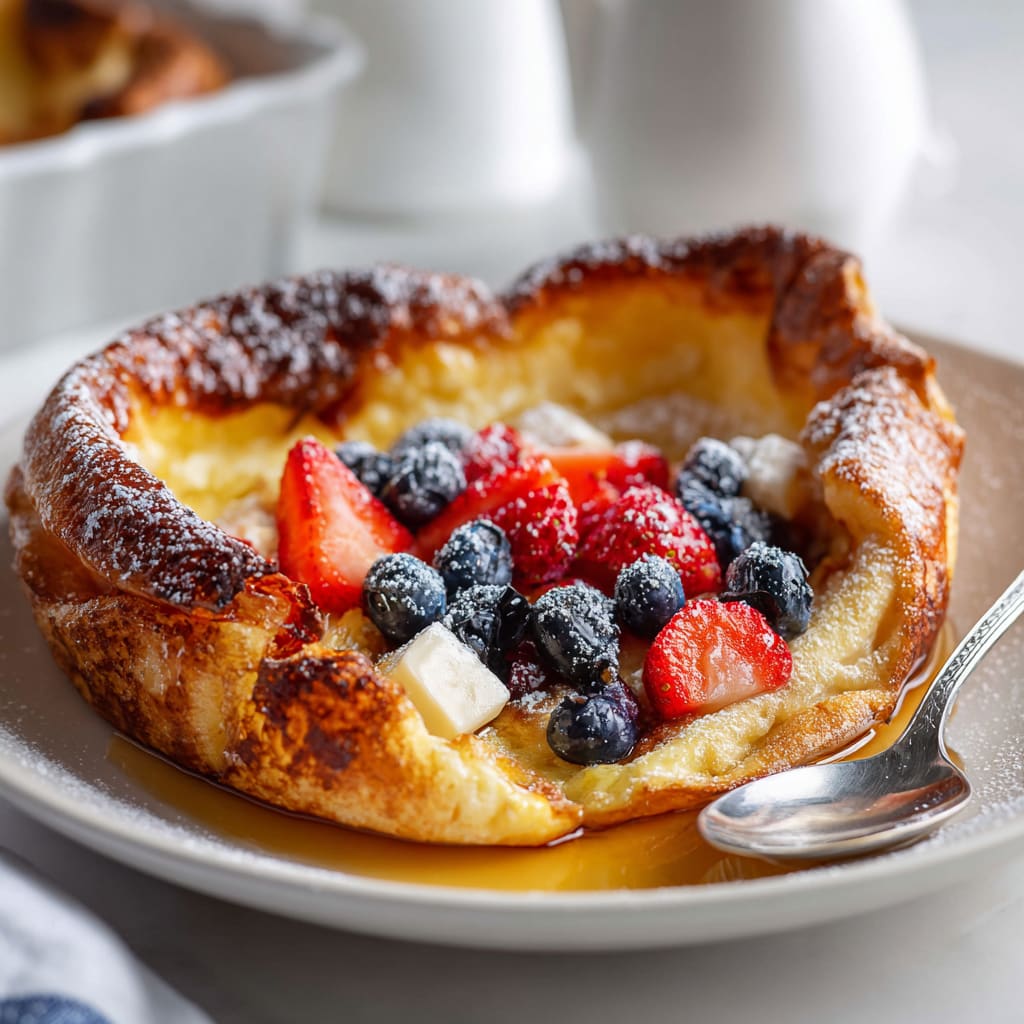
The golden, puffy edges of a perfectly Baked German Pancake rising dramatically above a hot skillet is one of breakfast’s most impressive sights. This show-stopping dish combines the airy texture of a soufflé with the comforting warmth of a traditional pancake, creating a deliciously unique morning treat. Also known as a Dutch baby, this Baked German Pancake requires minimal hands-on effort but delivers maximum flavor and visual appeal. The crisp exterior giving way to a tender, custard-like center creates an irresistible texture contrast that’s perfect for soaking up sweet toppings. You’ll learn how to create this impressive breakfast centerpiece with simple ingredients and foolproof techniques that guarantee success every time.
Why You’ll Love This Recipe
The Baked German Pancake is a breakfast game-changer that will quickly become a weekend tradition in your home. Unlike traditional pancakes that require standing over a hot stove flipping batch after batch, this German pancake bakes entirely in the oven, freeing you to prepare other items or simply enjoy your coffee. The dramatic puff that forms during baking creates a stunning presentation that’s sure to impress family and guests alike.
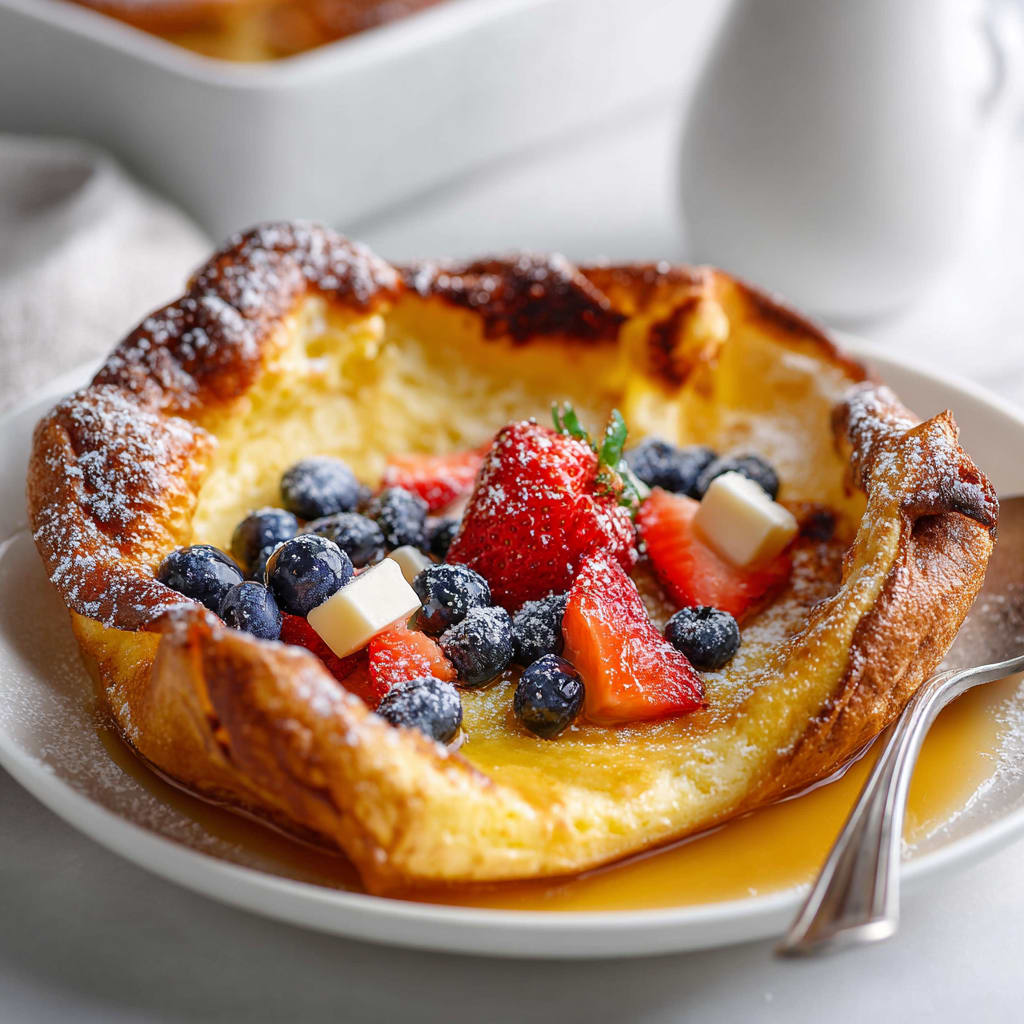
What makes this German oven pancake truly special is its incredible texture contrast. The edges climb the sides of the pan and become delightfully crisp and golden, while the center remains tender and slightly custardy. This perfect balance of textures provides the ideal canvas for whatever toppings you prefer—from a simple dusting of powdered sugar to fresh berries, lemon juice, or maple syrup.
The recipe uses basic pantry staples you likely already have on hand, making it perfect for impromptu brunches. With just a few minutes of preparation and about 25 minutes in the oven, you’ll have a showstopping breakfast that serves the whole family from one pan. The versatility of this pancake batter recipe allows for both sweet and savory interpretations, making it suitable for breakfast, brunch, or even dinner.
Ingredients List for the Baked German Pancake
The beauty of this German pancake recipe lies in its simplicity—just a few quality ingredients transform into something magical in the hot oven. The eggs provide structure and that characteristic rise, while the milk creates tenderness in the finished pancake.
- 6 large eggs
- 1 cup milk
- 2 1/2 tablespoons powdered sugar (optional – for the sweet version)
- 1 cup all-purpose flour
- 1 pinch of salt
- 1 teaspoon vanilla extract
- 5 tablespoons unsalted butter
Pro Tips
Achieving the perfect Baked German Pancake requires attention to a few crucial details that make all the difference between a good pancake and a great one:
Temperature matters: For the maximum dramatic puff, all ingredients should be at room temperature before mixing. Cold eggs and milk will not create as much rise during baking. If you’re short on time, place cold eggs in warm (not hot) water for 5 minutes before cracking.
Don’t overmix the batter: While you want a smooth batter, overmixing can develop too much gluten, resulting in a tougher pancake. Use a blender as directed, but pulse just until the ingredients come together smoothly. A few small lumps are actually preferable to overmixing.
The preheated pan is crucial: The signature rise of the Baked German Pancake depends on pouring the batter into a hot pan with melted butter. This immediate heat contact creates the steam that helps the edges climb and creates that beautiful golden color. Never pour batter into a cold pan, as you’ll miss out on the characteristic puffiness that makes this recipe special.
Instructions
Step 1: To make the German pancake, preheat your oven to 425ºF (220ºC). As the oven preheats, put the unsalted butter in a 9×13-inch baking pan and place it in the oven until melted.
Step 2: Place the eggs, milk, sugar, flour, salt, and vanilla extract in a blender and pulse until smooth. Pour the batter into the hot baking dish over the melted butter.
Step 3: Bake the German pancake for 22-27 minutes or until the edges are golden brown and puffy. Sprinkle the Baked German Pancake generously with powdered sugar, maple syrup, butter, or any other toppings you like.
Variations
The versatility of the Baked German Pancake is one of its greatest assets. Here are some delicious variations to try:
Apple German Pancake: Before adding the batter to the hot pan, arrange thinly sliced apples tossed with cinnamon and a tablespoon of sugar in the bottom of the pan with the melted butter. Pour the batter over the apples for a beautiful upside-down effect when served.
Savory German Pancake: Skip the sugar and vanilla, and add 1/4 cup of grated Parmesan cheese and 1 tablespoon of fresh herbs (such as thyme or chives) to the batter. After baking, top with sautéed mushrooms, spinach, or roasted tomatoes for a delicious brunch or light dinner option.
Gluten-Free Option: Substitute the all-purpose flour with a 1:1 gluten-free flour blend. The recipe works beautifully with this simple swap, though the pancake may not rise quite as dramatically as the original version.
Storage and Serving
The Baked German Pancake is at its absolute best when served immediately after baking, while the edges are at their crispest and the center is warm and tender. However, leftovers can be stored in an airtight container in the refrigerator for up to 2 days. Reheat in a 350°F oven for about 5 minutes to restore some of the texture, though it won’t be quite as puffy as when freshly made.
For serving, traditional accompaniments include a generous dusting of powdered sugar and a squeeze of fresh lemon juice—this classic combination highlights the pancake’s delicate flavor perfectly. Fresh berries make an excellent topping, especially when in season. For a more decadent option, serve with warm maple syrup, a dollop of whipped cream, or even a scoop of vanilla ice cream for a dessert-like treat.
For a beautiful presentation, bring the entire pan to the table immediately after removing from the oven, as the dramatic puff will slowly deflate as it cools—making for an impressive tableside moment when serving guests.
FAQs
Why didn’t my German pancake puff up as expected?
The dramatic rise comes from a combination of factors: room temperature ingredients, a properly preheated oven, and pouring the batter into a hot pan with melted butter. Cold ingredients or an insufficiently heated pan can prevent proper rising.
Can I make the batter ahead of time?
It’s best to make the batter just before baking. The leavening action begins immediately after mixing, and letting the batter sit too long can reduce the dramatic rise. If necessary, you can prepare it up to 30 minutes ahead and keep at room temperature.
What’s the difference between a German pancake and a Dutch baby?
They’re essentially the same dish with different names. “Dutch baby” is actually an Americanized version of “Deutsch” (German) baby pancake, which originated from German pancake recipes.
Can I use a cast-iron skillet instead of a baking dish?
Absolutely! A 12-inch cast-iron skillet works wonderfully and creates even more dramatic edges. Just ensure it’s well-heated before adding the butter and batter.
Why does my German pancake deflate so quickly?
This is completely normal! The Baked German Pancake will begin to deflate shortly after removing from the oven. This doesn’t affect the flavor at all, but for the most impressive presentation, have everyone gathered at the table when it comes out of the oven.
Baked German Pancake
- Prep Time: 15 mins
- Cook Time: 30 mins
- Total Time: 45 mins
- Yield: 4 people 1x
- Category: Breakfast
- Method: Cooking
- Cuisine: American
Description
Discover how to make a delicious Baked German Pancake at home with this easy recipe! Perfect for breakfast or brunch. Try it today!
Ingredients
- 6 large eggs
- 1 cup milk
- 2 1/2 tablespoons powdered sugar (optional – for the sweet version)
- 1 cup all-purpose flour
- 1 pinch of salt
- 1 teaspoon vanilla extract
- 5 tablespoons unsalted butter
Instructions
- Step 1– To make the german pancake: Preheat your oven to 425ºF (220ºC). As the oven preheats, put the unsalted butter in a 9×13-inch baking pan and place it in the oven until melted.
- Step 2– Place the eggs, milk, sugar, flour, salt, and vanilla extract in a blender and pulse until smooth. Pour the batter into the hot baking dish over the melted butter.
- Step 3– Bake the german pancake, for 22-27 minutes or until the edges are golden brown and puffy. Sprinkle the German baked pancake generously with powdered sugar, maple syrup, butter, or any other toppings you like.
Notes
Try This Recipe and Leave a comment Below, your opinion matters to me!
Nutrition
- Serving Size: 4 serving
- Calories: 400
- Sugar: 5g
- Sodium: 400mg
- Fat: 10g
- Saturated Fat: 3g
- Unsaturated Fat: 7g
- Trans Fat: 0g
- Carbohydrates: 40g
- Fiber: 5g
- Protein: 15g
- Cholesterol: 50mg