
Imagine biting into a warm, buttery triangle of bread with a perfectly crisp exterior giving way to a soft, comforting potato center. That’s the magic of Authentic Irish Potato Farls – a traditional Irish breakfast staple that transforms humble potatoes into something extraordinary. These griddle-cooked potato breads have been gracing Irish tables for generations, offering a delicious way to use leftover mashed potatoes while creating something uniquely satisfying. You’ll learn how to create these simple yet delectable potato farls with just a handful of ingredients, mastering a recipe that connects you to centuries of Irish culinary tradition.
Why You’ll Love This Recipe
These Authentic Irish Potato Farls will quickly become a favorite in your cooking repertoire for so many reasons. First, they celebrate the beautiful simplicity of Irish cooking – transforming basic pantry ingredients into something truly special. The contrast between the crisp, golden exterior and the fluffy, tender interior creates an irresistible textural experience that pairs perfectly with everything from a full Irish breakfast to a simple bowl of soup.
What makes these traditional Irish potato cakes truly special is their versatility. They can be enjoyed fresh off the griddle with just a smear of butter, topped with savory ingredients for lunch, or even served alongside dinner. The recipe is remarkably forgiving for beginners yet deeply satisfying for experienced cooks.
The best part? These potato farls come together in under 30 minutes, requiring minimal ingredients and equipment. They’re economical, reducing food waste by utilizing leftover mashed potatoes, while still delivering maximum flavor. The comforting aroma that fills your kitchen as they cook on the griddle will transport you straight to an Irish countryside kitchen.
Ingredients
For these Authentic Irish Potato Farls, you’ll need:
• 1 pound (450g) starchy potatoes (Russets or Maris Piper work best)
• 2 tablespoons (28g) butter, plus extra for cooking
• ½ cup (60g) all-purpose flour, plus extra for dusting
• 1 teaspoon (6g) salt
• ¼ teaspoon (1g) baking powder (optional, for lighter farls)
• 1 tablespoon (15ml) milk (only if needed to bind dry mixture)
Optional garnishes:
• Flaky sea salt
• Freshly ground black pepper
• Fresh herbs such as chives or parsley
Pro Tips
Achieving perfect Irish potato farls requires attention to a few critical details. First, choose the right potatoes – starchy varieties like Russets create a drier, fluffier texture ideal for farls. Waxy potatoes contain too much moisture and will require significantly more flour, resulting in a gummy texture.
The second crucial technique is proper mashing. For authentic texture, use a potato ricer or food mill if available. These tools create perfectly smooth potatoes without overworking the starches. If using a traditional masher, be gentle and avoid excessive mashing which develops gluten and makes the farls tough rather than tender.
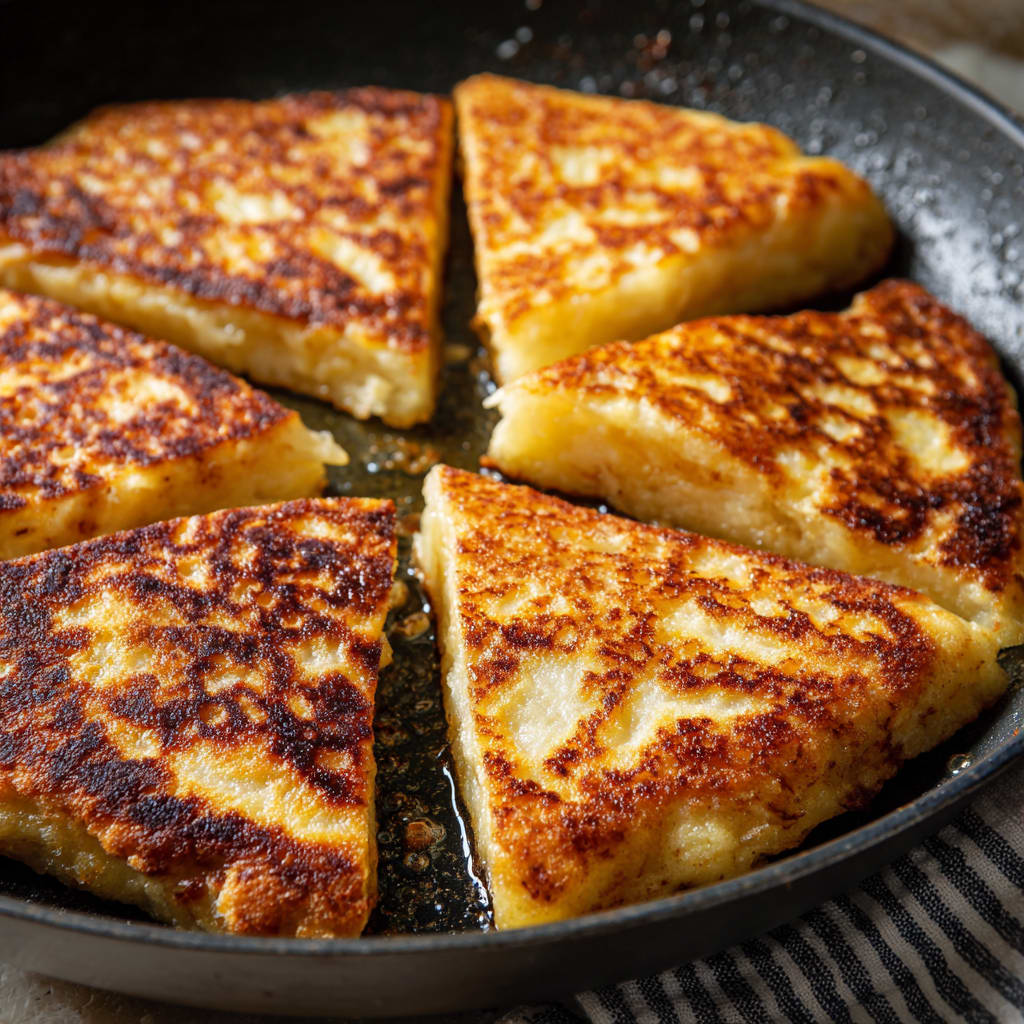
Finally, master the cooking temperature. Your griddle or heavy-bottomed pan should be at medium heat – hot enough to create that desirable golden crust but not so hot that the outside burns before the inside cooks through. A well-seasoned cast iron pan works wonderfully here, but any heavy non-stick skillet will do. Watch for gentle bubbling on the surface as your indicator that it’s time to flip.
Instructions
Step 1: Prepare the Potatoes
Place the whole, unpeeled potatoes in a large pot and cover with cold water. Add a generous pinch of salt and bring to a boil. Reduce to a simmer and cook until the potatoes are completely tender when pierced with a knife, about 20-25 minutes depending on size. Drain thoroughly in a colander and let them steam dry for 2-3 minutes – this crucial step removes excess moisture for lighter farls.
Step 2: Create the Dough
While the potatoes are still hot, peel them (using a kitchen towel to protect your hands) and pass through a ricer or food mill directly into a large mixing bowl. Immediately add the butter so it melts into the hot potatoes. Allow this mixture to cool slightly for 5 minutes before adding the flour, salt, and baking powder. Using your hands or a wooden spoon, gently mix until a soft dough forms. Avoid overmixing to keep your potato farls tender.
Step 3: Shape the Farls
Turn the dough onto a floured surface and knead very lightly just until smooth. Divide the dough into two equal portions and form each into a ball. Pat or roll each ball into a circle about 6-7 inches in diameter and approximately ½-inch thick. Using a sharp knife, cut each circle into quarters to create the traditional triangular farl shape.
Step 4: Cook to Perfection
Heat a heavy-bottomed skillet or griddle over medium heat and add a small knob of butter. When melted and bubbling slightly, place the farls into the pan, being careful not to overcrowd (cook in batches if needed). Cook for 3-4 minutes until the bottom is golden brown with beautiful caramelized spots. Flip carefully with a spatula and cook the other side for another 3-4 minutes. The potato farls should be golden brown on both sides with a slightly crisp exterior.
Step 5: Serve
Remove the Irish potato farls from the pan and place on a wire rack covered with a clean kitchen towel. This keeps them warm while allowing any excess steam to escape, maintaining that perfect texture. Serve immediately for the most authentic experience, ideally with a pat of good Irish butter melting over the top.
Variations
Cheese and Herb Potato Farls: Enhance your traditional Irish potato farls by folding 1/3 cup of sharp cheddar cheese and 2 tablespoons of chopped chives or scallions into the dough before cooking. This savory variation adds wonderful depth while maintaining the authentic texture. The cheese creates delightful crispy edges when it meets the hot griddle.
Garlic and Rosemary Potato Farls: For an aromatic twist, add 2 minced garlic cloves and 1 tablespoon of finely chopped fresh rosemary to your dough. Roasting the garlic beforehand will provide a mellower, sweeter flavor that complements the earthiness of the potatoes. This Mediterranean-inspired variation pairs beautifully with soups and stews.
Gluten-Free Irish Potato Farls: Replace the all-purpose flour with a 1:1 gluten-free flour blend (preferably one containing xanthan gum). Add an extra tablespoon of butter to compensate for the different absorption rate of gluten-free flours. The result is a version that’s nearly indistinguishable from the original, allowing everyone to enjoy this traditional Irish favorite regardless of dietary restrictions.
Storage and Serving
Your Authentic Irish Potato Farls will keep well in an airtight container in the refrigerator for up to 3 days. To reheat, avoid the microwave which can make them tough. Instead, warm them gently in a dry skillet over medium-low heat for 2-3 minutes per side, or toast them lightly to restore their delightful crisp exterior.
For longer storage, freeze cooled farls in a single layer on a baking sheet, then transfer to a freezer bag where they’ll keep for up to 2 months. Thaw overnight in the refrigerator before reheating as directed above.
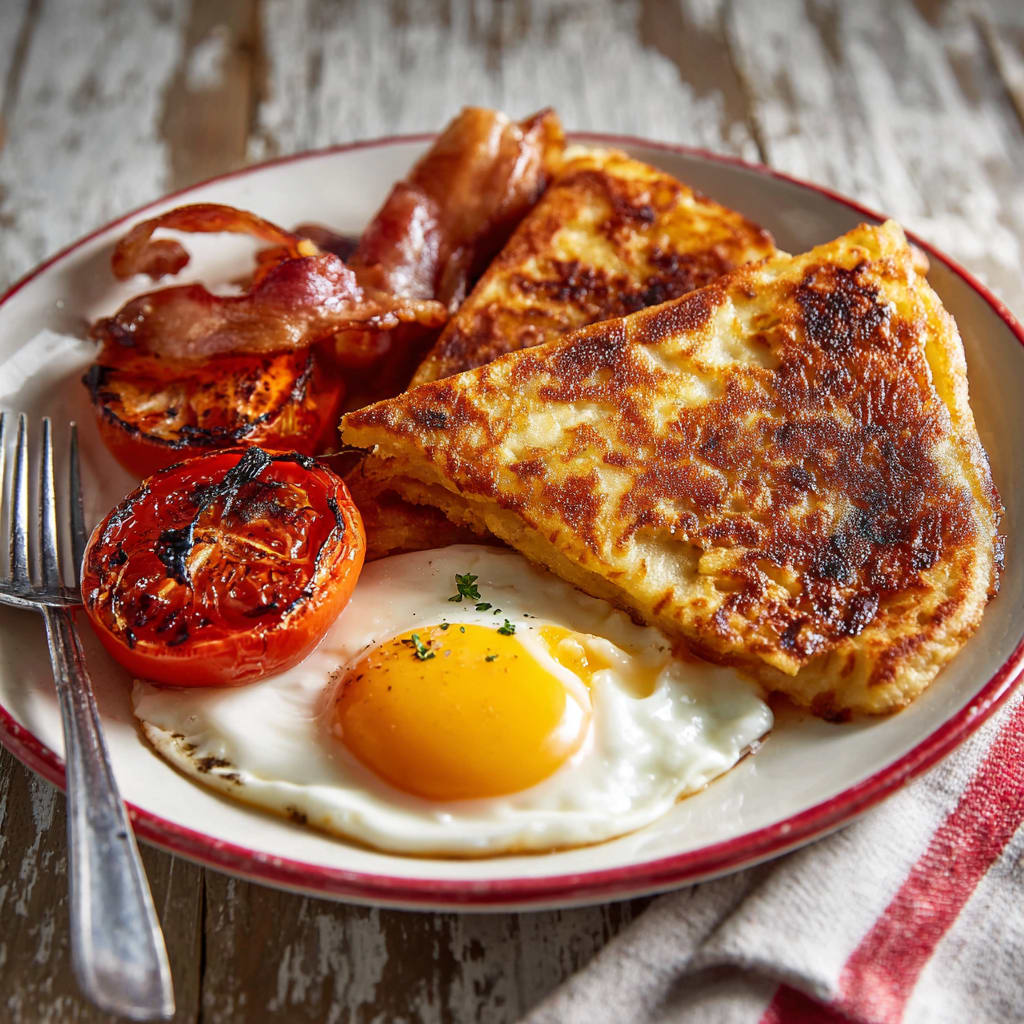
Serve your potato farls as part of a traditional Irish breakfast alongside eggs, bacon, sausage, black and white pudding, grilled tomatoes, and baked beans. For a simpler presentation, split and toast them like English muffins, then top with smoked salmon and cream cheese for an elegant brunch option. They also make excellent vehicles for savory toppings like avocado, poached eggs, or hearty beef stew, transforming this humble side into a satisfying meal.
FAQs
Can I use leftover mashed potatoes to make potato farls?
Yes! Using leftover mashed potatoes is actually traditional and reduces food waste. Just ensure they’re not too wet or loaded with milk and butter. You may need to adjust the flour slightly, adding more if the potatoes are very moist.
Why are my farls tough instead of tender?
Tough potato farls typically result from overworking the dough or adding too much flour. Mix ingredients just until combined and use only enough flour to prevent sticking. Also, ensure you’re using starchy rather than waxy potatoes.
Can I bake potato farls instead of cooking them on a griddle?
While traditionally griddle-cooked, you can bake Irish potato farls in a 400°F (200°C) oven for about 15-20 minutes. However, you won’t achieve quite the same characteristic crisp exterior and tender interior that makes farls special.
What’s the difference between potato farls and potato bread?
Potato farls and potato bread are regional variations of the same concept. Farls are specifically the quarter-circle shape (the word “farl” comes from the Gaelic “ceathru” meaning “quarter”) and are traditional in Ulster and Ireland, while potato bread might take various forms throughout the UK.
Are potato farls the same as boxty?
No, while both are traditional Irish potato dishes, boxty is made with raw grated potatoes mixed with mashed potatoes, creating a distinctly different texture. Authentic Irish Potato Farls are made exclusively with cooked potatoes and have a smoother consistency.

Authentic Irish Potato Farls Recipe
- Prep Time: 15 mins
- Cook Time: 30 mins
- Total Time: 45 mins
- Yield: 4 servings 1x
- Category: Breakfast
- Method: Cooking
- Cuisine: Americaine
Description
Discover an authentic Irish Potato Farls Recipe for a taste of Ireland at home! Try making this delicious dish today.
Ingredients
- 1 pound (450g) starchy potatoes (Russets or Maris Piper work best)
- 2 tablespoons (28g) butter, plus extra for cooking
- ½ cup (60g) all-purpose flour, plus extra for dusting
- 1 teaspoon (6g) salt
- ¼ teaspoon (1g) baking powder (optional, for lighter farls)
- 1 tablespoon (15ml) milk (only if needed to bind dry mixture)
Instructions
- Step 1: Prepare the Potatoes Place the whole, unpeeled potatoes in a large pot and cover with cold water. Add a generous pinch of salt and bring to a boil. Reduce to a simmer and cook until the potatoes are completely tender when pierced with a knife, about 20-25 minutes depending on size. Drain thoroughly in a colander and let them steam dry for 2-3 minutes – this crucial step removes excess moisture for lighter farls.
- Step 2: Create the Dough While the potatoes are still hot, peel them (using a kitchen towel to protect your hands) and pass through a ricer or food mill directly into a large mixing bowl. Immediately add the butter so it melts into the hot potatoes. Allow this mixture to cool slightly for 5 minutes before adding the flour, salt, and baking powder. Using your hands or a wooden spoon, gently mix until a soft dough forms. Avoid overmixing to keep your **potato farls** tender.
- Step 3: Shape the Farls Turn the dough onto a floured surface and knead very lightly just until smooth. Divide the dough into two equal portions and form each into a ball. Pat or roll each ball into a circle about 6-7 inches in diameter and approximately ½-inch thick. Using a sharp knife, cut each circle into quarters to create the traditional triangular farl shape.
- Step 4: Cook to Perfection Heat a heavy-bottomed skillet or griddle over medium heat and add a small knob of butter. When melted and bubbling slightly, place the farls into the pan, being careful not to overcrowd (cook in batches if needed). Cook for 3-4 minutes until the bottom is golden brown with beautiful caramelized spots. Flip carefully with a spatula and cook the other side for another 3-4 minutes. The **potato farls** should be golden brown on both sides with a slightly crisp exterior.
- Step 5: Serve Remove the **Irish potato farls** from the pan and place on a wire rack covered with a clean kitchen towel. This keeps them warm while allowing any excess steam to escape, maintaining that perfect texture. Serve immediately for the most authentic experience, ideally with a pat of good Irish butter melting over the top.
Notes
Fresh ingredients will always yield the best flavor results.
Nutrition
- Serving Size: 1 serving
- Calories: 300
- Sugar: 5g
- Sodium: 400mg
- Fat: 10g
- Saturated Fat: 3g
- Unsaturated Fat: 7g
- Trans Fat: 0g
- Carbohydrates: 40g
- Fiber: 5g
- Protein: 15g
- Cholesterol: 50mg